

India is undergoing a quiet but profound transformation in how it cares for its elderly population. Traditionally rooted in joint family systems and home-based caregiving, the country is now witnessing a steady rise in geriatric care homes and palliative care centres. What was once perceived as a Western concept or a social taboo is increasingly becoming a necessity and, in many cases, a preference for India’s ageing population.
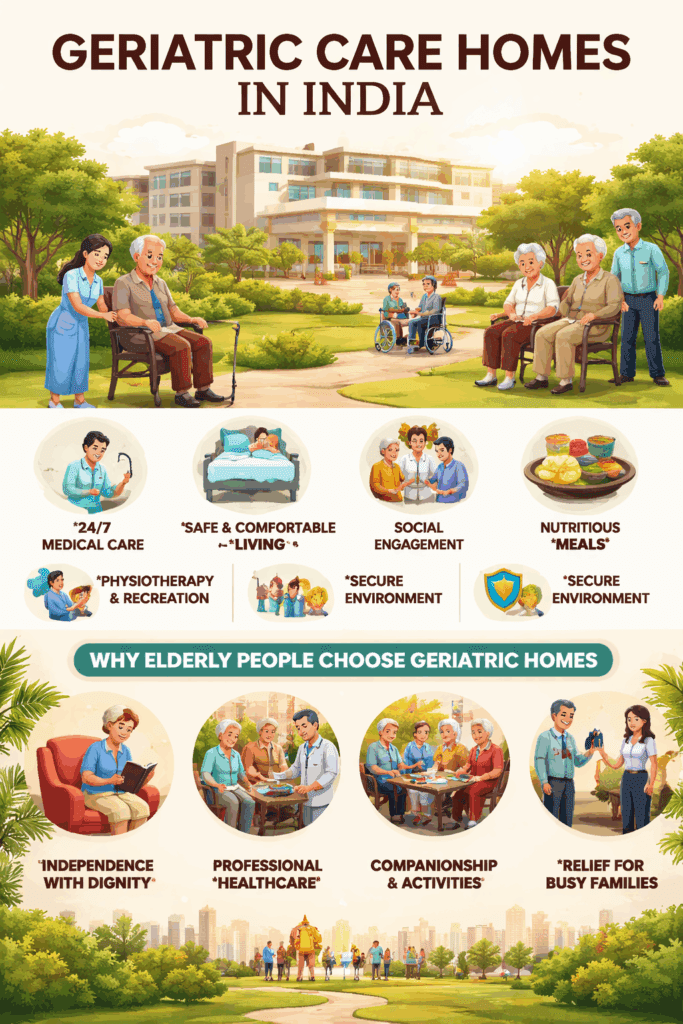
A Paradigm Shift in Elderly Care in 21st Century India.
This shift is not accidental. It is driven by significant social, cultural, demographic, medical, and economic changes that are reshaping Indian families and redefining old-age care. As India moves toward becoming one of the world’s oldest nations by population count, institutional elderly care is no longer an exception; it is the future.
- India’s Ageing Population: The Demographic Reality.
India currently has over 150 million people aged 60 years and above, a number projected to cross 300 million by 2050. Improved healthcare, better control of infectious diseases, and increased life expectancy have contributed to this longevity revolution. However, longevity without supportive care systems has created new vulnerabilities.
Older adults today live longer but often with chronic illnesses, functional disabilities, cognitive decline, and emotional challenges. This has resulted in rising demand for structured geriatric and palliative care services.
- From Joint Families to Nuclear Homes: A Cultural Shift.
One of the most significant drivers behind the rise of geriatric homes is the breakdown of the traditional joint family system.
Key cultural changes include:
- Urbanisation and migration for employment
- Smaller family sizes
- Dual-income households
- Increased work pressure and longer working hours
- Geographical separation of children from parents
In nuclear families, caregiving responsibilities often fall on a single working individual, making round-the-clock elder care at home increasingly impractical.
This shift has led to a care gap, not a care deficit, one that geriatric homes and palliative care centres are now filling.
- Changing Preferences of the Elderly Themselves.
Contrary to popular belief, many elderly individuals today choose geriatric facilities not because they are abandoned, but because they seek:
- Independence with safety
- Dignity and professional care
- Social interaction with peers
- Freedom from feeling like a “burden.”
Modern geriatric homes are no longer viewed as places of neglect. Instead, they are increasingly seen as wellness-oriented living environments offering medical supervision, companionship, and structured routines.
- Social Isolation and Loneliness: The Silent Epidemic.
Loneliness is emerging as one of the most serious public health issues among older adults in India.
Causes of elderly isolation include:
- Children living abroad or in other cities
- Loss of spouse and peers
- Reduced mobility
- Digital divide
- Social withdrawal due to illness
Geriatric homes address this by providing:
- Group activities
- Emotional support
- Peer bonding
- Mental health monitoring
In many cases, residents report better emotional well-being in such environments than when living alone at home.
Medical Complexity of Old Age: Beyond Family Care.
Old age is often accompanied by multiple chronic illnesses, requiring specialised and coordinated care.
Common geriatric health challenges:
- Diabetes, hypertension, heart disease
- Arthritis and mobility issues
- Dementia and Alzheimer’s disease
- Parkinsonism
- Stroke-related disabilities
- Cancer and end-stage organ diseases
Managing these conditions at home is challenging due to:
- Polypharmacy (use of multiple medications)
- Need for medication reconciliation
- Risk of drug interactions
- Need for skilled nursing and monitoring
Geriatric and palliative care centres offer multidisciplinary care models that include physicians, nurses, physiotherapists, counsellors, and pharmacists, something rarely achievable in in-home settings.
Palliative Care: From End-of-Life to Quality-of-Life.
Palliative care in India is also undergoing a significant transformation. Earlier associated only with terminal cancer care, it is now recognised as essential for:
- Chronic neurological diseases
- Advanced heart, lung, and kidney diseases
- Severe frailty and disability
- Pain and symptom management
- Psychological and spiritual support
Families increasingly realise that quality of life matters as much as longevity. Palliative care centres provide pain relief, dignity, emotional support, and family counselling, often reducing unnecessary hospitalisations and ICU admissions.
Economic Realities and Caregiving Burden.
Home-based elderly care often appears emotionally ideal but economically and practically unsustainable.
Hidden costs of home care include:
- Full-time attendants
- Frequent hospital visits
- Lost work hours of caregivers
- Emergency care expenses
- Emotional burnout
Organised geriatric facilities offer predictable, bundled care costs, professional accountability, and reduced caregiver stress. For many middle-class families, this model is becoming both economically viable and emotionally reassuring.
Why the Next Decade Will See Rapid Growth.
By the next decade, the rise of geriatric homes and palliative care centres in India is expected to accelerate due to:
- Ageing population boom
- Increased awareness of elderly rights and dignity
- Growth of healthcare infrastructure
- Medical insurance expansion
- Demand for specialised eldercare professionals
- Acceptance of institutional care as a dignified choice
This represents a paradigm shift from family-only caregiving to shared, professional, and compassionate care ecosystems.
Societal Reframing: From Abandonment to Empowerment.
The stigma around old-age homes is gradually fading. Today’s geriatric centres are:
- Wellness-driven
- Rights-based
- Person-centred
- Integrated with healthcare systems
They are not symbols of family failure, but indicators of evolving social responsibility.
Redefining Elderly Care in Modern India.
India stands at a crossroads. As family structures change and medical needs grow complex, geriatric homes and palliative care centres are emerging as essential pillars of the healthcare system.
They reflect not a loss of values, but an adaptation of values to modern realities. By prioritising dignity, comfort, autonomy, and quality of life, these facilities are shaping a future where ageing is supported, not suffered.
About The Author


