
India’s air pollution is not merely a seasonal headache; it’s a public health crisis affecting millions, with Delhi and other major cities repeatedly topping global charts for unhealthy air quality. From smog-filled skies to hazardous breathing conditions, the health impacts of pollution are being felt today, while its long-term consequences cast a shadow on the quality of life and future generations. This article dives deep into how pollution affects health, details the current situation in Delhi and other urban centres, explains the concept of air quality, and offers practical tips to mitigate harmful effects, especially for vulnerable children and families.
Pollution and Health: India’s Growing Crisis.
Air pollution in India is linked to deadly diseases, including lung cancer, stroke, heart disease, and respiratory disorders. Exposure to delicate particulate matter (PM2.5), nitrogen oxides, and ozone is causing more than 1.5 million premature deaths each year, according to recent studies. Marginalized populations, including children, the elderly, and those with chronic illnesses, suffer most. The health effects are not momentary; they lead to lifelong disabilities, economic losses, and reduced quality of life.
Delhi’s Air Pollution: The Current Scenario.
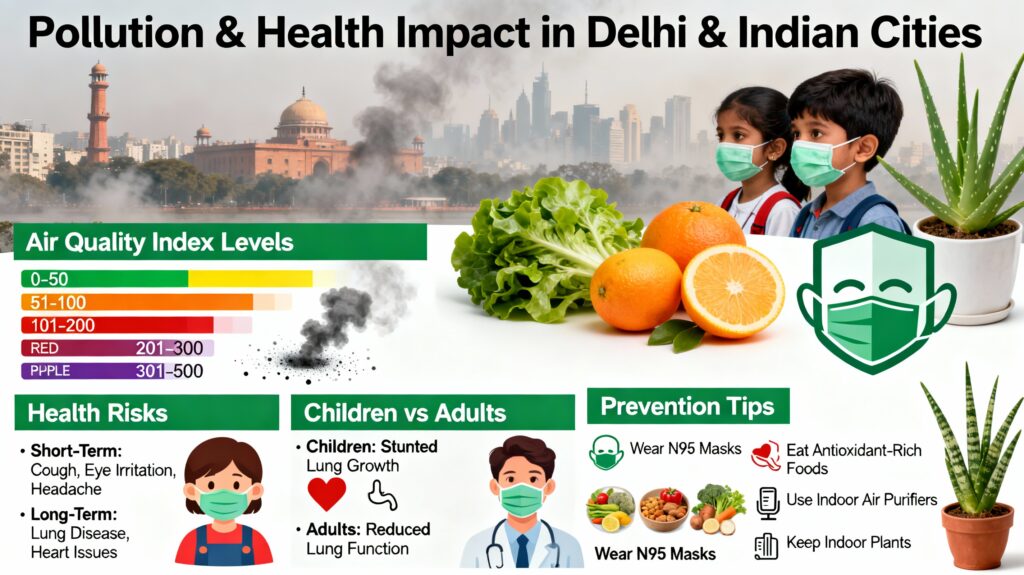
Delhi is the epicentre of India’s air pollution emergency. In November 2025, the Air Quality Index (AQI) breached the ‘severe’ level, touching 428 despite intensive government action and public advisories. Outdoor activities were restricted, schools switched to online classes, and construction work was halted to prevent further deterioration. Surrounding cities like Noida, Gurugram, and Ghaziabad also endured consecutive days of ‘very poor’ to ‘severe’ air quality, forcing authorities to accelerate emergency pollution-control measures. The reality: residents are regularly exposed to air that is unsafe to breathe, with even healthy adults reporting respiratory distress.
Air Quality and Quality of Life.
What is air quality? The Air Quality Index (AQI) is a key public health metric that reflects concentrations of pollutants such as PM2.5, PM10, ozone, and nitrogen dioxide. An AQI above 300 is considered hazardous, with levels often reaching 400–500 in Delhi, especially in winter due to stubble burning, construction dust, and vehicular exhaust. Poor air quality isn’t just about physical illness; it’s about the quality of life: limited outdoor time, disrupted education, decreased productivity, and perpetual anxiety over health. Studies show drops in school attendance, increased fatigue, and cognitive impairment in polluted environments.
Long-Term Effects on All Populations.
Prolonged exposure to pollution is devastating, especially for children. Kids exposed to chronic air pollution show worse scores in memory and cognitive tests, suffer frequent infections, and are at higher risk of developmental delays, stunted growth, and learning disabilities. Adults face increased incidence of heart disease, cancer, diabetes, and mental health disorders, with particulate matter linked to hypertension, cholesterol imbalances, and even premature death. The economic loss due to lost productivity and healthcare costs amounts to over 1% of India’s GDP each year.
How Pollution Impacts Children.
Children’s lungs are smaller, their immune systems are developing, and they breathe faster than adults, making them uniquely vulnerable to the harmful effects of pollutants. Airborne toxins can cross into their bloodstreams and brains, causing not only physical illness but also affecting neural development and academic performance. Teachers report that students cough during morning prayers, struggle to focus, and miss school frequently during pollution peaks. Babies born during high-pollution months weigh less, and there’s increased risk of stillbirth, growth failure, and chronic respiratory concerns.
Integrating Pollution and Quality of Life.
The link between air pollution and quality of life is clear. Residents of polluted cities spend less time outdoors, their mental well-being suffers, and opportunities for work, play, and learning are curtailed. Chronic headaches, anxiety, and poor sleep quality are increasingly common. For children, pollution means lost school days, weaker social development, and barriers to healthy play, a true “health and education emergency”.
Ways to Prevent Harmful Effects of Pollution.
Despite the grim reality, there are actionable steps individuals and families can take to mitigate the impact of pollution on health and quality of life:
- Track Air Quality Regularly: Use mobile apps or websites to monitor real-time AQI in your city, and avoid outdoor activities during ‘poor’ or ‘severe’ days.
- Optimize Indoor Air: Use air purifiers, keep windows closed during high AQI, and frequently vacuum surfaces to remove dust and toxins. Indoor plants such as spider plants and peace lilies also help filter some pollutants.
- Mask Up Outdoors: N95 or N99 respirators provide significant protection against airborne fine particles and should be worn during pollution spikes, especially for children, older adults, and people with respiratory conditions.
- Improve Diet for Better Immunity: A nutrient-rich diet strengthens immune function. Focus on foods high in antioxidants, vitamin C (citrus fruit, amla), vitamin E (nuts, seeds), and omega-3 fatty acids (flaxseed, walnut). Turmeric and green leafy vegetables help reduce inflammation.
- Ventilate Smartly: Air your homes during low-pollution periods (usually midday), and avoid using wood, coal, or kerosene indoors for cooking or heating.
- Stay Hydrated: Drinking plenty of water flushes toxins from the body and keeps respiratory tissues moist.
- Societal Action: Support clean energy initiatives, encourage carpooling, and participate in local environmental campaigns. Demand stricter emission controls and support greener public transport.
Tips for Protecting Children and Sensitive Groups.
- Limit outdoor playtime during high-pollution days; opt for indoor activities, but ensure good indoor ventilation.
- Choose schools that provide air-filtered indoor spaces or hybrid learning options during pollution peaks.
- Encourage children to wear properly fitting masks outside, and educate them about the dangers of pollution in an age-appropriate way.
Moving Towards Cleaner Air and Better Health.
Pollution and health go hand in hand, especially in India’s urban centres, where air quality remains a pressing concern for all generations. Delhi’s current situation is a stark reminder: living with poor air quality is not normal, and every exposure adds up to long-term health risks, especially for children whose formative years are being shaped by toxic skies. By combining personal protective measures with collective action, masking up, improving diet, and demanding better policies, families can safeguard their health and reclaim some quality of life, even as India fights for cleaner air for all.
Pollution isn’t just an environmental issue; it’s a question of health, hopes, and the future. Let’s breathe easier, together.
About The Author


