
India’s health and population landscape is undergoing a dramatic transformation, shaped by demographic shifts, rapid urbanization, rising life expectancy, and persistent challenges, including infectious diseases and the widespread prevalence of non-communicable diseases (NCDs). The coexistence of undernutrition, obesity, aging, and unequal access to healthcare presents unique hurdles and opportunities in the world’s most populous country. This article examines health and population trends in developing and transitional societies, using current, real-world examples from India, and highlights how innovative strategies and policies are shaping a healthier future.
Introduction: India’s Demographic Transition.
India’s population exceeds 1.4 billion, with a rapidly aging segment and youthful majority. By 2025, nearly 190 million Indians will be above 60 years, a shift that increases the demand for healthcare services, while over 60% of the population remains under the age of 35, driving economic potential. This demographic dichotomy demands tailored health strategies for both the elderly and the young.
Disease Burden: From Communicable to Non-Communicable.
Traditionally, infectious diseases like tuberculosis, malaria, and polio exacted a heavy toll in developing countries, including India. Concerted interventions, such as the National Tuberculosis Elimination Program and sustained polio vaccination drives, have achieved remarkable progress. For instance, India was declared polio-free in 2014, and multiple districts have reported an 80% reduction in TB incidence by 2025.
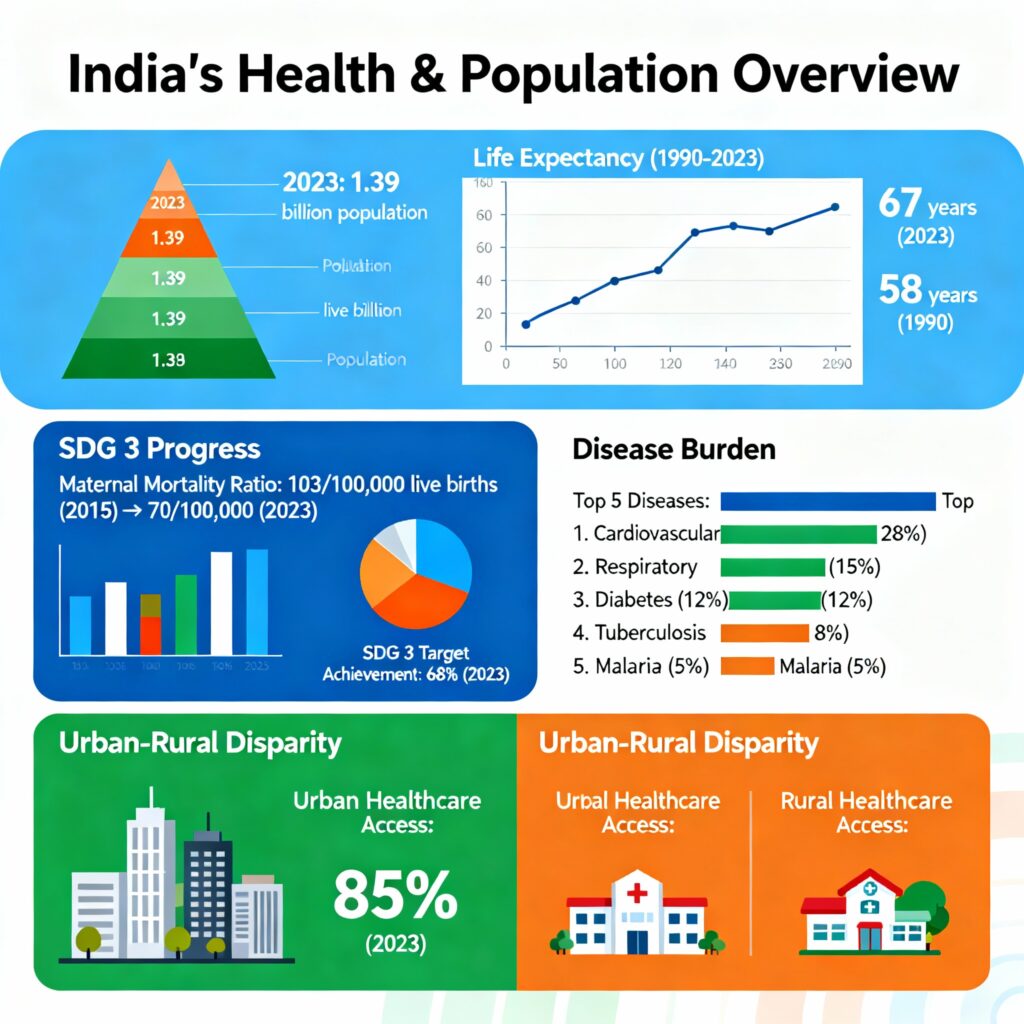
However, a ‘double burden’ has emerged: non-communicable diseases now account for nearly 60% of all deaths. Over 101 million Indians live with diabetes, while cardiovascular disorders, cancers, and chronic respiratory illnesses are spreading rapidly due to sedentary lifestyles, dietary changes, and environmental pollution.
Undernutrition and Obesity Paradox.
A striking paradox characterizes India’s nutritional health 36% of children under five remain stunted, 32% underweight, and nearly 19% wasted, a phenomenon driven by poverty, malnutrition, and food insecurity in rural and urban poor communities. Simultaneously, urbanization has fueled a surge in adult obesity; 24% of women and 23% of men are now overweight or obese. The dual challenge of undernutrition and obesity is a growing feature in transitional societies.
Child and Maternal Health: Making Significant Strides, Yet Ongoing Gaps.
India has made measurable improvements in maternal and child health outcomes. The Maternal Mortality Ratio dropped from 130 per 100,000 live births in 2014-16 to 93 in 2019-21, and infant mortality similarly declined from 39 to 27 per 1,000 live births. Despite these gains, vulnerable groups such as rural women and marginalized communities lag due to inequities in health access.
Urban-Rural Disparity and Health Equity.
Massive disparities persist between rural and urban populations. More than 70% of rural Community Health Centres lack essential specialists, while infrastructure gaps exacerbate health inequities. Even in urban areas, hospitals are often overwhelmed. Approximately 32 million Indians fall below the poverty line each year due to out-of-pocket health expenses, highlighting high financial vulnerability.
Innovations and Interventions: Recent Success Stories.
- Digital Health Solutions: Startups like Jiyyo e-mitra clinics in Uttar Pradesh utilize telemedicine to bring medical consultations to remote villages, thereby reducing travel burdens and enhancing access to care.
- mHealth Applications: Digital tools for hypertension awareness have successfully engaged urban slum and rural populations, offering culturally relevant information and preventive advice.
- Public Health Campaigns: The Swachh Bharat Mission (Clean India) and the Free Drugs and Diagnostics Service Initiative have made essential medications and diagnostics more accessible, thereby enhancing public health outcomes.
Financing and Policy: Toward Universal Health Coverage.
Public health spending in India has risen but remains around 2% of GDP, one of the world’s lowest rates among large economies. Nevertheless, schemes such as Ayushman Bharat aim to deliver Universal Health Coverage, covering over 85 million hospitalizations and expanding the national health safety net. Despite improvements, gaps in insurance coverage and service quality require continued policy attention.
Linking Health and Population Progress to Sustainable Development Goals.
India’s progress in health and population is closely linked to the Sustainable Development Goals (SDGs), a global blueprint for securing a better future by 2030. In 2025, India achieved its highest-ever ranking in the SDG Index, moving into the top 100 out of 167 countries and showcasing notable improvements in key areas, including poverty reduction, access to electricity, clean cooking fuels, and basic sanitation. Despite this milestone, the country still faces challenges in meeting targets for climate action, clean water, and urban sustainability, with only one-third of the SDG targets on track and significant progress needed for full achievement by 2030. National policies must continue to strengthen health systems, reduce inequalities, and accelerate resource sustainability to realize the vision of the SDGs for all Indians.
Environmental and New-Age Risks.
Environmental issues, such as air pollution and water contamination, compound health problems, while road traffic accidents, mental health disorders, and climate change add to the complex risk profile of India’s population health. Notably, nearly 23.3% of all deaths are due to ischemic heart disease, and non-communicable illnesses dominate urban health statistics.
Conclusion: The Path Ahead.
Health and population trends in India reflect the broader journey of developing and transitional societies, with impressive gains coexisting alongside persistent challenges. Continued investments in health infrastructure, innovative digital solutions, targeted interventions, and the reduction of socioeconomic disparities are critical to ensuring inclusive, effective, and sustainable healthcare progress for all Indians.
References.
- “World Health Day: India’s roadmap to inclusive healthcare,” New Indian Express, April 2025.
- “India – WHO Data,” World Health Organization, September 2025.
- “Disease burden initiative in India,” Institute for Health Metrics and Evaluation, October 2024.
- “Affordable and Accessible Healthcare for All,” Press Information Bureau, June 2025.
- “Digital health interventions for improving access to primary healthcare in India,” PLOS Global Public Health, May 2024.
About The Author


