
World Hand Hygiene Day is observed every year on 5th May to raise awareness of the importance of hand hygiene in preventing infections and ensuring patient safety. Initiated by the World Health Organization, this global campaign highlights how a simple act like handwashing can save millions of lives.
In a world where infections spread rapidly through contact, hand hygiene remains one of the most effective and affordable preventive measures. Whether in hospitals, workplaces, or homes, clean hands play a critical role in maintaining health and reducing the spread of disease.
Why Hand Hygiene is More Important Than Ever.
With increasing urbanization, global travel, and rising healthcare challenges, infections are spreading more easily than before. Hand hygiene is a powerful barrier against the spread.
Key Benefits of Proper Hand Hygiene.
- Prevents Transmission of Infections
Germs can easily transfer from contaminated surfaces to hands and then to the mouth, nose, or eyes. Proper hand washing significantly reduces this risk. - Protects High-Risk Groups
Children, elderly individuals, and patients with weakened immune systems are more vulnerable to infections. Good hand hygiene protects them from avoidable health complications. - Reduces Disease Burden
Regular handwashing reduces the incidence of respiratory infections, diarrheal diseases, and viral illnesses. - Improves Public Health Outcomes
When practiced widely, hand hygiene reduces community transmission and contributes to healthier populations.
Global Hand Hygiene Practices: WHO Guidelines.
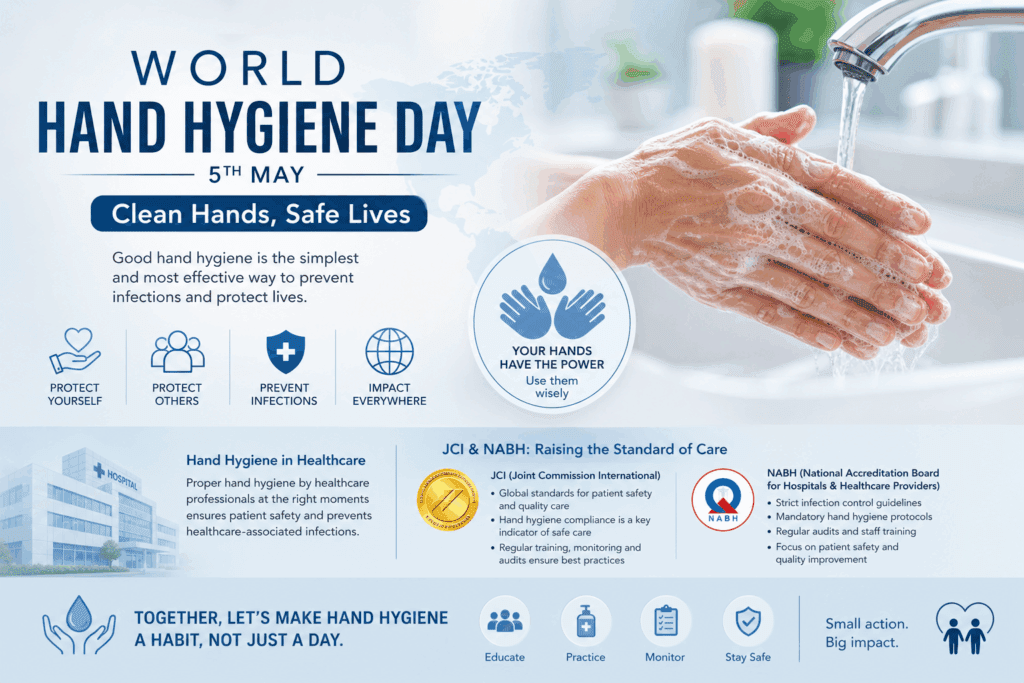
The World Health Organization has established evidence-based guidelines to standardize hand hygiene practices, especially in healthcare settings.
WHO’s “5 Moments for Hand Hygiene”
These five moments are critical in preventing infection transmission in hospitals:
- Before touching a patient
Prevents transferring germs to patients. - Before clean or aseptic procedures
Ensures a sterile environment during medical procedures. - After exposure to body fluids
Protects healthcare workers from contamination. - After touching a patient
Prevents cross-contamination between patients. - After touching patient surroundings
Reduces the spread of germs from surfaces.
These simple but structured practices have proven to significantly reduce healthcare-associated infections worldwide.
Hand Hygiene in Everyday Life.
While hospitals follow strict hygiene protocols, hand hygiene is equally essential in daily life. Most infections begin in community settings and can easily spread through poor hygiene practices.
When Should You Wash Your Hands?
- Before eating or cooking food
- After using the toilet
- After coughing, sneezing, or blowing nose
- After touching public surfaces like door handles or railings
- After handling garbage or waste
- After caring for a sick person
Correct Hand Washing Technique.
- Wet hands with clean running water
- Apply soap and lather thoroughly
- Scrub all areas including palms, back of hands, between fingers, and under nails for at least 20 seconds
- Rinse well
- Dry with a clean towel or air dry
When soap and water are not available, alcohol-based hand sanitizers are a useful alternative.
Importance of Hand Hygiene in Healthcare Settings.
In hospitals, hand hygiene is not just a recommendation it is a critical safety practice. Healthcare-associated infections (HAIs) are a major concern with compromised immunity, and proper hand hygiene is the most effective way to prevent them.
Why Hand Hygiene is Crucial in Hospitals.
- Prevents infection transmission between patients
- Protects healthcare workers from exposure
- Reduces complications and hospital stay duration
- Improves overall patient safety and outcomes
- Supports infection control protocols
Even a small lapse in hand hygiene can lead to serious consequences, especially in intensive care units and surgical settings.
JCI and NABH Standards: Ensuring High Hygiene Standards.
Accreditation bodies play a vital role in maintaining healthcare quality and safety.
Joint Commission International (JCI).
JCI sets global benchmarks for patient safety and infection control. Hand hygiene is a core component of JCI standards.
Key Focus Areas Include:
- Strict adherence to hand hygiene protocols
- Continuous staff training and education
- Monitoring compliance through audits
- Integration of hygiene practices into patient safety systems
JCI-accredited hospitals ensure that hygiene practices meet international standards.
National Accreditation Board for Hospitals & Healthcare Providers (NABH).
NABH provides accreditation to healthcare institutions in India, emphasizing quality and patient safety.
Key Requirements Include:
- Implementation of strict hand hygiene policies
- Regular audits and monitoring systems
- Training programs for healthcare staff
- Awareness initiatives for patients and visitors
NABH ensures that hospitals follow standardized infection control practices, making healthcare safer and more reliable.
Role of Healthcare Institutions in Promoting Hygiene.
Hospitals and healthcare facilities play a crucial role in promoting hand hygiene awareness both within and outside the institution.
Key Initiatives Taken by Hospitals
- Conducting regular training sessions for staff
- Installing hand sanitization stations across facilities
- Displaying educational posters for patients and visitors
- Monitoring hygiene compliance through audits
- Promoting campaigns on infection prevention
These measures create a culture of safety and responsibility in healthcare environments.
Simple Habits That Make a Big Difference.
Hand hygiene is a small habit with a powerful impact. Consistency is the key to its effectiveness.
Easy Everyday Practices
- Wash hands regularly with soap and water
- Carry hand sanitizer while traveling
- Avoid touching face with unclean hands
- Teach children proper hand washing techniques
- Maintain hygiene in shared spaces
These simple actions can prevent infections and protect both individuals and communities.
World Hand Hygiene Day reminds us that clean hands are one of the strongest defenses against infections. From hospitals to homes, proper hand hygiene is essential for maintaining health and preventing disease transmission.
Global guidelines by WHO and strict standards set by JCI and NABH highlight the importance of hand hygiene in ensuring patient safety and quality healthcare.
By adopting simple hand washing habits and spreading awareness, we can contribute to a safer, healthier, and infection-free society.
About The Author


