

Table of Contents
How Wearable Health Tech in India is Transforming Healthcare
India shoulders 20% of the global disease burden, yet 70% of its healthcare infrastructure caters to urban areas, leaving rural populations underserved. Wearable health tech in India is gaining momentum, emerging as a game-changer. From smartwatches tracking heart rhythms to glucose-monitoring patches, these devices are no longer just fitness gadgets, they’re revolutionizing patient care. In a country grappling with over 77 million diabetics and rising hypertension cases, wearables offer real-time insights, empowering patients and easing the strain on overstretched hospitals.
This article explores how cutting-edge advancements like ECG-enabled watches and biosensors are bridging India’s healthcare gaps, particularly in rural settings. We’ll delve into their role in managing chronic diseases, spotlight Indian startups driving innovation, and address challenges like data privacy and accessibility. For medical professionals, students, and enthusiasts, wearable tech isn’t just a trend – it’s a transformative tool reshaping India’s healthcare future.
The Rise of Wearable Health Tech in India and Globally
Wearable health technology has evolved from simple step counters to sophisticated medical tools, reflecting a global shift in healthcare delivery. Devices like the Apple Watch, with its ECG feature, and Fitbit’s oxygen saturation trackers have set a benchmark, turning consumer gadgets into clinical allies. Globally, these wearables are reducing hospital visits by enabling remote monitoring—a trend India is swiftly adopting.
With a population exceeding 1.4 billion and a tech-savvy youth, India stands at a unique intersection of need and opportunity. The country’s healthcare system, strained by chronic diseases like diabetes and cardiovascular conditions, finds a lifeline in wearables. For medical professionals, this means access to real-time patient data, enhancing diagnostic precision. For students, it’s a glimpse into the future of medicine – where technology and patient care converge.
Wearable health tech in India is accelerating adoption, driven by affordability and a growing telemedicine ecosystem. This fusion of global innovation and local demand is setting the stage for wearable tech to redefine healthcare delivery, from bustling cities to remote villages.
Advancements in Wearable Health Tech in India
Wearable health technology is pushing boundaries with innovations tailored to India’s pressing medical needs. Wearable health tech in India includes ECG-enabled smartwatches, like the Apple Watch or Indian alternatives, monitor heart rhythms in real time, alerting users to irregularities such as atrial fibrillation—a boon for a nation where cardiovascular diseases claim 17% of lives annually. These devices, validated by clinical studies, offer doctors actionable data, reducing reliance on sporadic clinic visits.
Wearable Health Devices for Chronic Diseases
Equally transformative are glucose-monitoring patches, like continuous glucose monitoring (CGM) systems, which track blood sugar levels without invasive pricks. With India home to 77 million diabetics, CGM empowers patients to manage their condition proactively, while physicians gain insights into trends and adjust treatments precisely.
Beyond these, wearable blood pressure cuffs, sleep trackers, and stress sensors are emerging, addressing hypertension and mental health; conditions rampant across urban and rural India. For medical professionals, integrating this data with electronic health records (EHRs) enhances chronic disease management.
Imagine a rural patient with hypertension: a smartwatch detects elevated readings, prompting a telemedicine consult, averting a crisis. These advancements, though not without accuracy challenges, are clinically validated and increasingly affordable, making them vital tools for India’s healthcare ecosystem. For students and enthusiasts, they represent a frontier where technology meets patient care, demanding both mastery and innovation.
Wearable Health Tech in India: Bridging Rural-Urban Gaps
India’s healthcare landscape is starkly divided: 70% of its infrastructure serves urban centers, while rural areas, housing two-thirds of the population, rely on just 16% of hospital beds. This gap leaves millions without timely access to specialists or diagnostics, exacerbating chronic conditions like diabetes and hypertension. Wearable health tech offers a lifeline.
Rural Healthcare India: Wearable Solutions
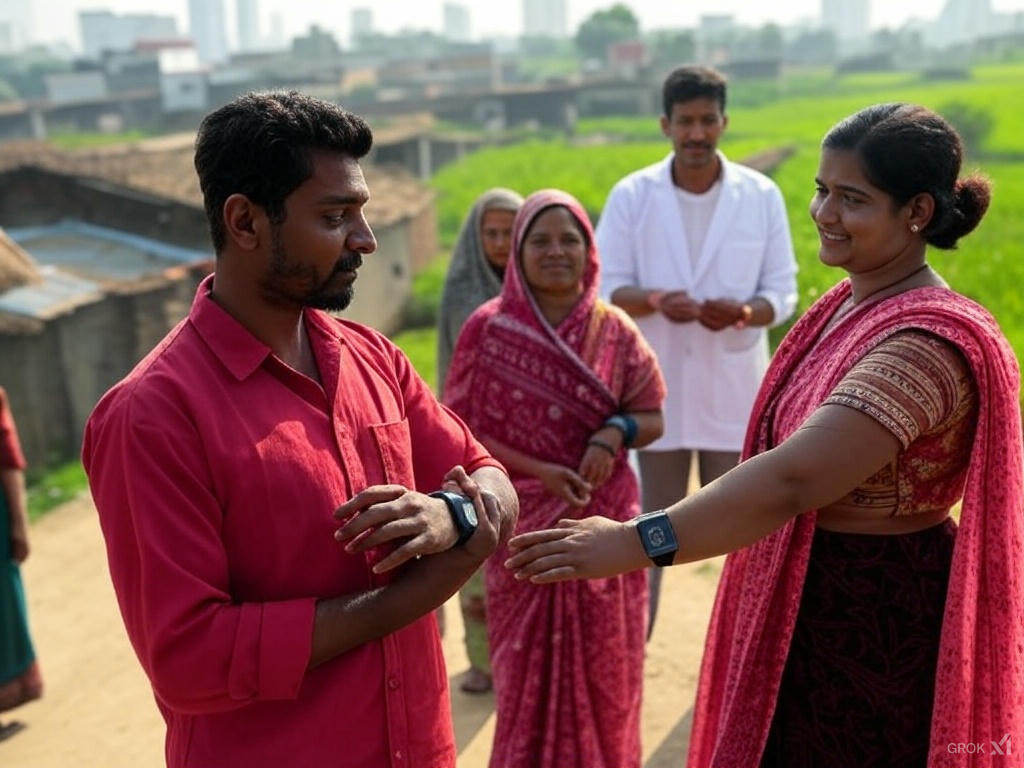
In rural India, Wearable health tech in India offers affordable devices, smartwatches tracking heart rates or glucose patches monitoring sugar levels, deliver real-time data, reducing the need for arduous travel to distant clinics. Paired with telemedicine, a hypertensive farmer in Uttar Pradesh, for instance, can share wearable readings with a city-based cardiologist, averting emergencies. Studies, like those from Tamil Nadu’s telehealth initiatives, show wearables cut diagnostic delays by 30%, empowering rural patients with agency over their health. In urban settings, where hospitals overflow with chronic disease cases, wearables ease the burden by enabling home monitoring, freeing beds for acute care.
For medical professionals, interpreting this data sharpens treatment plans; a diabetologist can tweak insulin doses based on CGM trends, not just clinic snapshots. Medical students, meanwhile, must master remote monitoring skills to thrive in this tech-driven era. Yet, challenges persist; rural internet penetration lingers at 34%, and device costs remain barriers. Still, wearables are narrowing the divide, offering scalable solutions where traditional infrastructure falls short. By connecting patients to care regardless of geography, they’re not just tools; they’re a revolution in equity, demanding doctors and students alike adapt to a data-rich, patient-centric future.
Indian Health Tech Startups Driving Wearable Innovation
India’s wearable health tech scene is thriving, driven by innovative startups addressing local healthcare challenges. Wearable health tech in India thrives with startups like Agatsa, a Noida-based pioneer, offers SanketLife, a pocket-sized ECG device that screens heart conditions affordably, making it a game-changer for rural diagnostics. Its portability and low cost empower primary care providers and patients alike. Cardea Labs, another trailblazer, develops wearable cardiac monitoring solutions, blending precision with accessibility to tackle India’s cardiovascular burden. Meanwhile, Noise, a homegrown brand, has surged in popularity with affordable smartwatches featuring SpO2 and heart rate tracking, appealing to urban health enthusiasts.
These startups prioritize scalability and cost-effectiveness, crucial for India’s diverse, price-sensitive market. Collaborations with medical professionals for clinical validation enhance their credibility. For doctors, these tools offer scalable patient monitoring; for students, they’re a sandbox for innovation. By leveraging India’s tech talent and addressing local needs, these companies are not just competing globally but redefining healthcare delivery. Their success inspires medical enthusiasts to explore wearable tech’s potential, fostering a future where health solutions are both cutting-edge and inclusive.
Challenges Facing Wearable Health Tech in India
While wearable health tech promises transformation, significant hurdles remain.
Data Privacy in Healthcare Wearables India
Data privacy tops the lis. Devices collecting heart rates, glucose levels, and sleep patterns generate sensitive health data vulnerable to breaches. India’s Personal Data Protection Bill aims to address this, but enforcement lags, raising ethical concerns for doctors handling patient information.
Accessibility & Cost
Accessibility is another barrier; with rural internet penetration at just 34%, many lack the connectivity to sync wearables with telemedicine platforms. Cost, too, excludes low-income groups, despite affordable options, advanced devices like CGM patches remain out of reach for millions.
Accuracy
Beyond these, accuracy varies across wearables, potentially misleading patients and complicating clinical decisions. Patient compliance, wearing devices consistently, is also a hurdle, especially in rural settings with limited health literacy.
For medical professionals, advocating for secure, equitable tech adoption is critical; students can research solutions like low-cost sensors or offline data tools. Government subsidies and public-private partnerships could bridge gaps, while awareness campaigns might boost usage. These challenges demand a collaborative push to ensure wearables fulfill their potential without compromising safety or fairness.
The Future of Wearable Health Tech in India
The horizon for wearable health tech in India gleams with promise. Imagine AI-powered wearables predicting diabetic emergencies or heart attacks, seamlessly integrated with telemedicine for instant interventions.
- As 5G rolls out, wearable health tech in India could link rural patients to urban specialists, shrinking healthcare divides.
- Personalized medicine, tailoring treatments via continuous monitoring, may curb chronic disease morbidity, vital for India’s 77 million diabetics and millions with hypertension.
- For medical professionals, this means richer datasets for precision care; for students, it’s a call to innovate at the intersection of tech and health.
- Cost reductions and local manufacturing could democratize access, while startups refine scalable solutions.
Embracing this future, doctors must adopt wearables as diagnostic allies, students should pioneer advancements, and enthusiasts stay informed. Wearable tech isn’t just evolving, it’s poised to become India’s healthcare backbone, blending innovation with compassion.
Wearable Health Tech in India: A Healthcare Lifeline
Wearable health tech is reshaping India’s healthcare narrative, bridging rural-urban divides and tackling chronic diseases head-on. From ECG-enabled watches spotting heart irregularities to glucose patches empowering diabetics, these devices deliver real-time care where traditional systems falter. Indian startups like Agatsa and Noise underscore this revolution, offering affordable, scalable solutions, though challenges – data privacy, accessibility, and accuracy – demand vigilance.
For medical professionals, wearables enhance patient oversight; for students and enthusiasts, they herald a tech-driven medical era. As India’s healthcare evolves, from overcrowded urban hospitals to remote villages, wearables promise equity and empowerment. Their potential to reduce hospital strain and improve outcomes is undeniable. Embrace them. Explore their capabilities, advocate their ethical use, and innovate for a healthier tomorrow. In a nation of 1.4 billion, where every heartbeat counts, wearable tech isn’t just innovation, it’s a lifeline to a stronger, more connected healthcare future.
About The Author


