
Heart disease often develops silently, without obvious warning signs, until it reaches an advanced stage. One of the most effective ways to understand your heart’s health early is through a lipid profile test, a simple blood test that reveals how fats are behaving inside your body. Yet, despite its importance, many people either misunderstand lipid numbers or ignore them altogether.
This article aims to demystify the lipid profile, explain its components, connect it with lifestyle and diet, and help you understand how timely action can protect your heart for years to come.
What Is a Lipid Profile?
A lipid profile is a blood test that measures different types of fats (lipids) in your blood to assess the risk of cardiovascular disease. These fats are essential for normal body functions, but when present in excess or imbalance, they can damage blood vessels and the heart.
The test is usually done after 8–12 hours of fasting. It is widely recommended for adults, especially those with risk factors such as diabetes, obesity, smoking, high blood pressure, or a family history of heart disease.
Why Lipids Matter for Your Heart.
Lipids travel through your bloodstream to supply energy, build cell membranes, and produce hormones. However, excess lipids, especially unhealthy cholesterol, can accumulate on the walls of arteries, forming plaques. This process, known as atherosclerosis, narrows blood vessels and increases the risk of:
- Heart attack
- Stroke
- Peripheral artery disease
- Sudden cardiac death
Monitoring lipid levels allows early detection and prevention long before symptoms appear.
Key Components of a Lipid Profile.
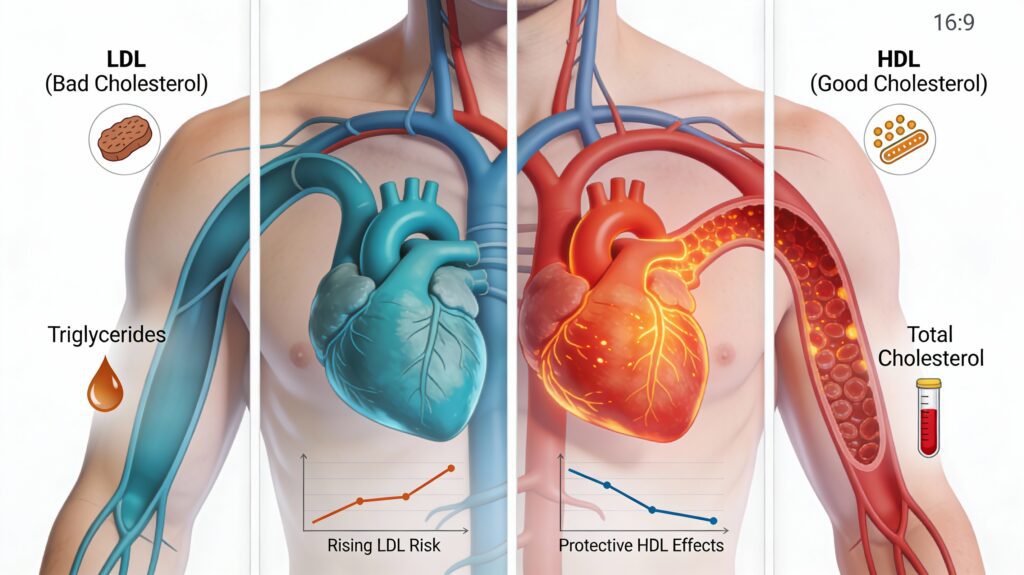
1. LDL Cholesterol “Bad” Cholesterol
Low-density lipoprotein (LDL) transports cholesterol from the liver to tissues. When LDL levels are high, excess cholesterol deposits on the walls of arteries.
Why it’s harmful:
- Promotes plaque formation
- Narrows arteries
- Increases the risk of heart attack and stroke
Goal: Lower LDL as much as possible, especially in people with diabetes or existing heart disease.
2. HDL Cholesterol “Good” Cholesterol
High-Density Lipoprotein (HDL) works in the opposite direction. It removes excess cholesterol from the bloodstream and carries it back to the liver for disposal.
Why it’s protective:
- Cleans excess cholesterol
- Reduces plaque buildup
- Protects against heart disease
Goal: Higher HDL levels are beneficial, particularly through exercise and healthy fats.
3. Triglycerides
Triglycerides are the most common form of fat in the body and serve as an energy reserve. Excess calories, especially from sugar and refined carbohydrates, are converted into triglycerides.
Why high levels are risky:
- Increase heart disease risk
- Commonly associated with obesity and diabetes
- Worsens outcomes when combined with high LDL
4. Total Cholesterol
This is the sum of LDL, HDL, and a portion of triglycerides. While useful, it should always be interpreted alongside individual components.
Who Should Get a Lipid Profile?
You should consider regular lipid testing if you:
- Are above 30 years of age
- Have diabetes, hypertension, or obesity
- Smoke or consume alcohol regularly
- Have a sedentary lifestyle
- Have a family history of heart disease
- Have experienced chest pain or breathlessness
Even young adults can have abnormal lipid levels due to poor diet, stress, or genetics, making early testing necessary.
Lifestyle and Lipids: The Strongest Connection.
Daily habits deeply influence your lipid profile. The good news is that lifestyle modification is one of the most potent treatments for abnormal lipids.
Diet
- Increase fruits, vegetables, whole grains, and legumes
- Choose healthy fats like nuts, seeds, olive oil, and fish
- Reduce fried foods, bakery items, and trans fats
- Limit sugar, refined flour, and sweetened beverages
Physical Activity.
- At least 150 minutes of moderate exercise per week
- Improves HDL
- Lowers LDL and triglycerides
- Helps maintain a healthy weight
Weight Management.
Excess body fat, especially around the abdomen, is strongly linked to elevated triglyceride levels and low HDL cholesterol. Even a 5–10% weight reduction can significantly improve lipid levels.
Role of Medical Guidance.
While lifestyle changes are foundational, some individuals require medications such as statins or fibrates, especially if:
- LDL levels remain high despite lifestyle changes
- There is existing heart disease
- Diabetes or multiple risk factors are present
Medical supervision ensures safe treatment, proper monitoring, and individualized goals.
Lipid Profile and Silent Risk.
One of the most dangerous aspects of abnormal lipids is that they often do not cause symptoms. Many heart attacks occur in people who felt “completely fine” days earlier. Lipid testing acts as an early warning system, allowing preventive action rather than emergency treatment.
Nutrition, Counselling, and Long-Term Success.
Understanding numbers is only the first step. Long-term heart health depends on:
- Personalized dietary planning
- Regular follow-up testing
- Sustainable behavioral changes
- Professional guidance from physicians, dieticians, and fitness experts
Heart health is not achieved through short-term diets but through consistent, informed choices.
A Preventive Mindset for a Healthier Future.
Modern medicine increasingly emphasizes prevention rather than cure. The lipid profile test fits perfectly into this approach: simple, affordable, and powerful. By understanding your lipid numbers and acting early, you reduce not only your risk of heart disease but also improve overall quality of life.
Final Thoughts.
Your heart works tirelessly every moment of your life. A lipid profile test offers a rare opportunity to listen to what your heart is silently telling you. Whether you are young or old, healthy or managing a chronic illness, knowing your lipid status empowers you to take control of your future.
Test early. Act wisely. Protect your heart before it asks for help.
About The Author


