
Table of Contents
World Breastfeeding Week (1st–7th August) is a global call to action, a celebration of one of the most natural and powerful tools we have to build a healthier, more equitable, and economically stronger society. Championing this cause every year, WHO, UNICEF, Ministries of Health, and civil society partners worldwide come together to promote, protect, and support breastfeeding.
In 2025, under the banner of WHO’s “Healthy Beginnings, Hopeful Futures,” World Breastfeeding Week draws critical attention to the role of healthcare systems, government schemes, and societal support in empowering women on their breastfeeding journeys.
But what makes breastfeeding so vital? Why is it being championed not only by pediatricians and mothers but also by economists and policymakers?
This article examines the unparalleled value of breastfeeding, the systemic support it necessitates, and the role of the MAA – Mothers’ Absolute Affection scheme in fostering a more nurturing environment for mothers and infants in India.
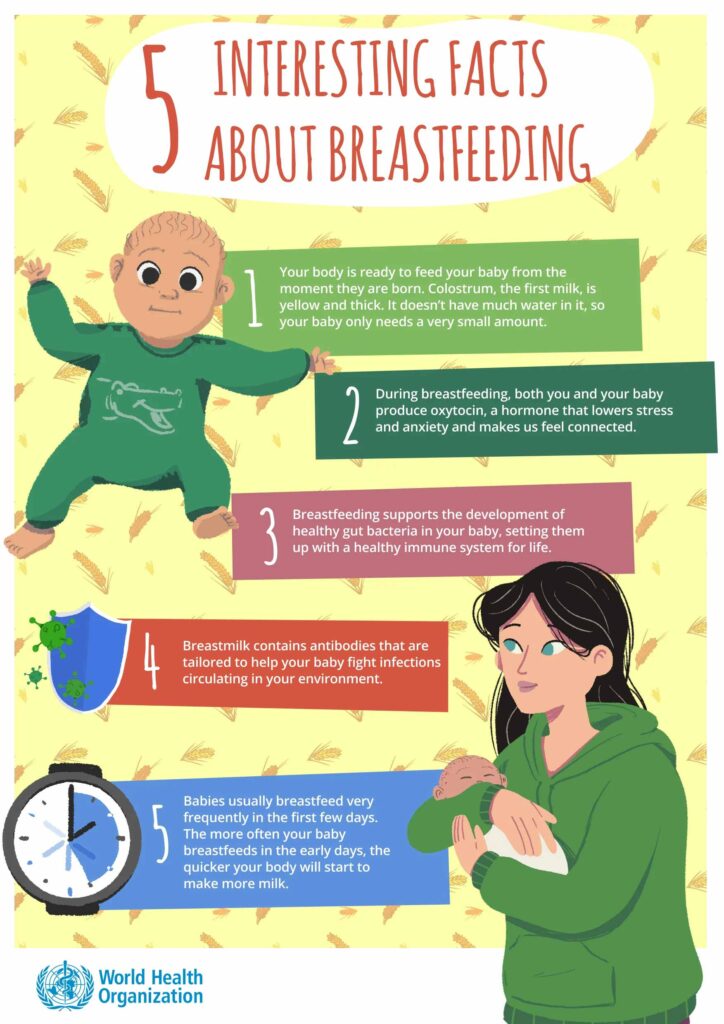
Breastfeeding: Nature’s First Vaccine.
Breastfeeding is much more than a source of nutrition. It’s a baby’s first immunization, providing essential antibodies, enzymes, and hormones that protect infants against infections and diseases. Here are some key benefits:
For the Baby:
- Reduces the risk of diarrhoea, pneumonia, asthma, ear infections, and sudden infant death syndrome (SIDS)
- Promotes cognitive development, increasing IQ levels and educational outcomes later in life
- Enhances emotional bonding and security
- Reduces the risk of obesity, diabetes, and hypertension in later life
For the Mother:
- Reduces postpartum bleeding and promotes uterine contraction
- Lowers the risk of breast and ovarian cancers
- May reduce the risk of type 2 diabetes and postpartum depression
- Promotes natural birth spacing through lactational amenorrhea
The Economics of Breastfeeding: A Smart Investment.
Breastfeeding is not just a health intervention; it is smart economics.
According to a 2016 study published in The Lancet, scaling up breastfeeding globally could prevent more than 823,000 child deaths and 20,000 maternal deaths annually. Moreover, it could save the US $ 300 billion over a decade due to reduced healthcare costs and improved human capital outcomes.
In low- and middle-income countries like India, investments in breastfeeding can have a direct impact on GDP growth by enhancing workforce productivity through improved childhood nutrition and brain development.
The Role of the Healthcare System
A woman’s ability to initiate and sustain breastfeeding depends heavily on the support she receives from the healthcare system before, during, and after birth.
This includes:
- Antenatal counselling on breastfeeding benefits and techniques
- Immediate skin-to-skin contact post-delivery
- Support from trained lactation consultants
- Assistance with common breastfeeding challenges like latching issues, sore nipples, and milk insufficiency
- Referrals to community-based peer support groups
WHO and UNICEF call for skilled breastfeeding counselling at every level of healthcare, from hospitals to rural health centres, to ensure no woman is left behind.
Creating Breastfeeding-Friendly Environments.
In India, there has been a commendable shift toward creating breastfeeding-friendly environments in public and private spaces. Many shopping malls, airports, and corporate offices now offer dedicated nursing rooms, ensuring privacy and comfort for lactating mothers. Indian Railways has also taken progressive steps by setting up breastfeeding booths and baby feeding rooms at key railway stations, reflecting a growing recognition of mothers’ needs in transit. Both public institutions and private companies are increasingly acknowledging that supporting breastfeeding is not just a maternal issue, but a collective societal responsibility.
Breastfeeding success does not rely solely on the mother’s willpower. It requires a supportive environment at every level:
At Home:
- Family members, especially husbands and grandmothers, should be educated and involved in supporting breastfeeding decisions.
In Hospitals:
- Adopt the Baby-Friendly Hospital Initiative (BFHI) standards, which promote the early initiation of breastfeeding and discourage pre-lacteal feeds.
At Work:
- Enforce workplace policies that allow maternity leave, paid lactation breaks, and breastfeeding rooms.
In Media:
- Promote accurate information and counter the aggressive marketing of infant formula.
Why the Code Matters: Combating Formula Marketing.
In many countries, including India, the aggressive marketing of infant formula undermines breastfeeding. The International Code of Marketing of Breast-milk Substitutes, developed by WHO, restricts the promotion of infant formula and related products to ensure mothers receive unbiased, science-backed information.
India enforces this through the Infant Milk Substitutes Act (IMS Act), which bans advertising, promoting, and offering incentives for formula products. However, better enforcement and public awareness are still needed.
MAA – Mothers’ Absolute Affection: India’s Flagship Scheme.
Launched by the Ministry of Health and Family Welfare, Government of India, the MAA (Mother’s Absolute Affection) program is a landmark initiative promoting breastfeeding across India.
- Key Objectives of MAA:
- Promote early initiation of breastfeeding within 1 hour of birth
- Ensure exclusive breastfeeding for the first 6 months
- Support continued breastfeeding for 2 years or more with complementary feeding
- Raise mass awareness through IEC campaigns, street plays, posters, and media
- Train frontline workers like ASHAs, ANMs, and Anganwadi workers in breastfeeding counselling
- MAA in Action:
- Setting up breastfeeding corners in public health facilities
- Integrating breastfeeding counselling in antenatal and postnatal care
- Organizing community-based awareness campaigns during World Breastfeeding Week
- Monitoring implementation through state and district-level reviews
Global and National Commitments
India is a signatory to several global declarations promoting breastfeeding, including:
- The Innocenti Declaration (1990)
- Global Breastfeeding Collective Goals
- Every Newborn Action Plan
These global frameworks, supported by national schemes like MAA, signal that breastfeeding is a public health priority, not just a personal choice.
Breastfeeding Challenges in India: The Ground Reality.
Despite policy efforts, India still faces challenges:
- Only 41% of infants are breastfed within the first hour of birth (NFHS-5)
- The exclusive breastfeeding rate stands at 63.7%, leaving room for improvement
- Lack of trained personnel in rural areas
- Cultural taboos and myths around breastfeeding
- Working mothers face inadequate support in the workplace
Solutions require an intersectoral approach combining health, labour, education, and media to dismantle barriers.
A Shared Responsibility.
Breastfeeding is not the sole responsibility of the mother. It is a collective responsibility of healthcare providers, families, employers, governments, and society as a whole. By investing in trained lactation support, community awareness, and protective legislation, we can create an ecosystem where every woman feels confident and supported in her breastfeeding journey.
Conclusion: Hopeful Futures Begin at the Breast.
Investing in breastfeeding is investing in the health, intelligence, and productivity of the next generation. It is one of the most cost-effective public health interventions we can adopt. With schemes like MAA, global guidance from the WHO and UNICEF, and the active involvement of communities and workplaces, we can ensure that every child receives the best possible start in life.
This World Breastfeeding Week, let’s reaffirm our commitment to supporting, protecting, and promoting breastfeeding not just for today, but for a brighter, healthier tomorrow.
References:
- The Lancet Breastfeeding Series (2016): https://www.thelancet.com/series/breastfeeding
- WHO – World Breastfeeding Week 2025: https://www.who.int/campaigns/world-breastfeeding-week
- UNICEF India – Breastfeeding: https://www.unicef.org/india/what-we-do/breastfeeding
- Ministry of Health and Family Welfare – MAA Scheme: https://nhm.gov.in/index1.php?lang=1&level=2&sublinkid=1043&lid=609
- National Family Health Survey (NFHS-5): https://rchiips.org/nfhs/
- International Code of Marketing of Breast-milk Substitutes – WHO: https://www.who.int/publications/i/item/9241541601
About The Author


