
Table of Contents
In today’s interconnected world, public health is no longer confined by geographical boundaries. International travel, trade, migration, and global connectivity have transformed the way societies interact. While these developments have created opportunities, they have also highlighted the importance of awareness about infectious diseases that may emerge in different parts of the world.
One such disease that continues to attract global attention is Ebola Virus Disease (EVD). Although outbreaks are largely confined to certain regions of Africa and cases remain extremely rare in countries such as India, understanding the disease is important from a public health perspective.
Awareness does not mean alarm. Instead, it empowers individuals to make informed decisions, recognize symptoms when necessary, and support efforts that protect communities. Knowledge remains one of the most effective tools in preventing disease transmission and strengthening public health preparedness.
What Is Ebola Virus Disease?
Ebola Virus Disease is a severe viral illness caused by infection with viruses belonging to the Ebola virus family. The disease was first identified in 1976 near the Ebola River in what is now the Democratic Republic of Congo.
Since then, several outbreaks have occurred in parts of Central and West Africa. Advances in surveillance, laboratory diagnostics, vaccination strategies, and healthcare preparedness have significantly improved the global response to Ebola outbreaks.
Despite its serious nature, it is important to understand that Ebola is not a disease that spreads casually among the general public. Proper awareness of transmission routes and preventive measures helps separate facts from misconceptions.
Why Ebola Continues to Receive Global Attention.
Ebola has received international attention because of its potential to cause severe illness and the considerable pressure outbreaks can place on healthcare systems.
However, public health experts emphasize that awareness should be guided by science rather than fear.
Several factors contribute to the importance of continued vigilance:
- Increasing international travel
- Global movement of populations
- Emerging infectious disease threats
- Need for rapid outbreak detection
- Importance of infection prevention measures
Today, global health organizations closely monitor Ebola outbreaks and work with national governments to strengthen preparedness and response systems.
How Does Ebola Spread?
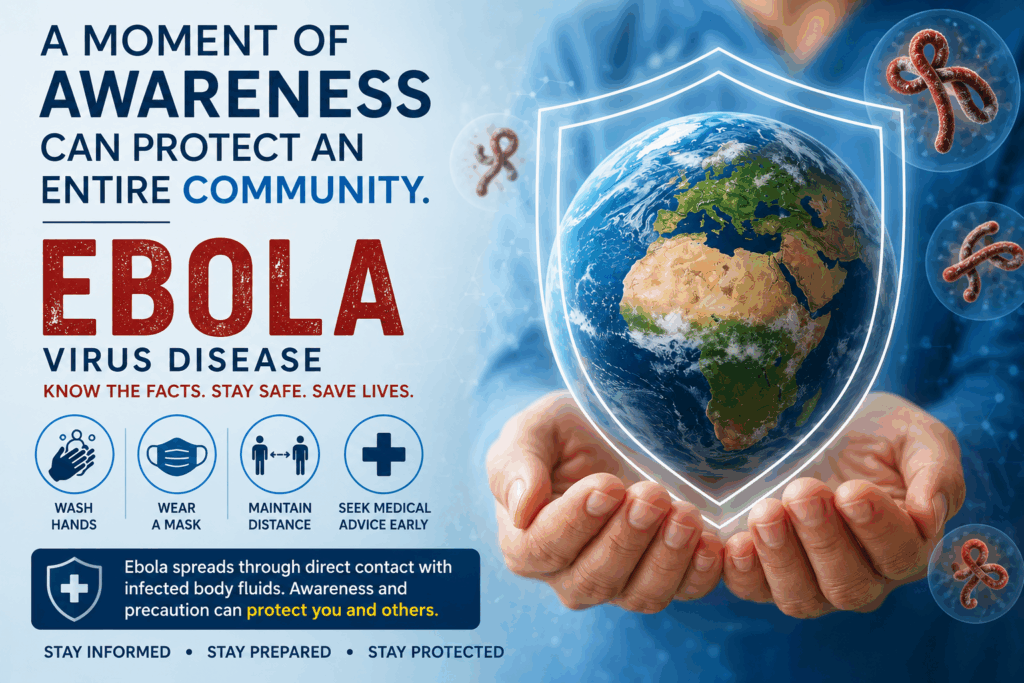
Understanding transmission is essential for preventing unnecessary fear and promoting evidence-based awareness.
Ebola may spread through:
- Direct contact with blood and body fluids of an infected person, including saliva, vomit, urine, sweat, and stool.
- Contact with contaminated surfaces, personal belongings, or materials exposed to infectious body fluids.
- Exposure to contaminated medical equipment when appropriate infection control practices are not followed.
- Close contact while caring for an infected individual without adequate protective precautions.
Importantly, Ebola does not spread through routine social interactions such as passing someone on the street or casual contact in everyday settings.
Recognizing the Symptoms.
One of the challenges associated with Ebola Virus Disease is that its early symptoms can resemble many other common infections.
This makes medical evaluation important, particularly when symptoms occur after travel to affected regions.
Common Symptoms May Include:
- Sudden high fever accompanied by extreme fatigue and weakness
- Severe headache along with muscle and body aches
- Digestive symptoms such as vomiting, diarrhoea, and abdominal pain
- Loss of appetite and a general feeling of illness or discomfort
As the disease progresses, some individuals may develop more severe complications, including unexplained bleeding or bruising.
However, it is important to remember that these symptoms can also occur in many other illnesses. Symptoms alone do not confirm Ebola infection.
Why Early Recognition Matters.
Early recognition remains one of the most important aspects of infectious disease management.
Prompt medical evaluation helps healthcare professionals assess symptoms, identify potential risk factors, and determine appropriate next steps.
Benefits of Early Medical Evaluation Include:
- Faster diagnosis
- Timely supportive treatment
- Reduced risk of complications
- Better patient monitoring
- Appropriate infection prevention measures
- Protection of close contacts and family members
For individuals who have recently travelled to areas with reported outbreaks, sharing travel history with healthcare providers is particularly important.
A simple conversation about recent travel can significantly improve the efficiency of medical evaluation and care.
Prevention: The Most Effective Strategy.
Preventing infectious diseases is often more effective than treating them after they occur.
Fortunately, many preventive measures are straightforward and practical.
Key Prevention Measures Include:
- Regular hand hygiene using soap and water or alcohol-based sanitizers
- Avoiding direct contact with body fluids of sick individuals
- Following public health guidance and travel advisories
- Using appropriate protective equipment in healthcare settings
- Seeking medical attention when symptoms develop
- Practicing responsible infection prevention behaviours
Prevention not only protects individuals but also contributes to community health and public safety.
The Role of Public Health Systems.
Modern healthcare systems are significantly better prepared for infectious disease challenges than they were decades ago.
Public health agencies, hospitals, laboratories, and international organizations work together to:
- Monitor outbreaks
- Conduct disease surveillance
- Improve diagnostic capabilities
- Strengthen healthcare preparedness
- Educate communities
- Support rapid response efforts
These coordinated actions help identify and contain outbreaks more effectively while protecting both healthcare workers and the public.
Travel and Health Awareness.
As global travel becomes increasingly common, travel health awareness has become an important aspect of disease prevention.
Travelers visiting regions affected by infectious disease outbreaks should:
- Stay informed about official travel advisories
- Follow local public health recommendations
- Monitor their health after returning home
- Seek medical advice if symptoms develop
- Inform healthcare providers about recent travel history
Travel awareness is not about avoiding travel it is about travelling responsibly and staying informed.
Simple Steps That Can Make a Difference.
Protecting public health begins with awareness and responsible action.
Staying informed through reliable health information, following travel advisories, practicing good hand hygiene, and seeking medical attention when needed are simple yet effective ways to reduce health risks.
For individuals returning from regions with reported outbreaks, sharing recent travel history with healthcare professionals can support timely evaluation and appropriate care.
Small, informed actions not only protect individual health but also contribute to the safety and well-being of families, communities, and society as a whole.
Awareness Without Alarm.
One of the most important messages surrounding Ebola Virus Disease is that awareness should not lead to panic.
The vast majority of people will never encounter Ebola directly. However, understanding the disease and recognizing warning signs helps ensure that concerns are addressed responsibly if they arise.
Public health awareness encourages preparedness, informed decision-making, and responsible behaviour. It strengthens community resilience and helps individuals respond calmly and effectively when faced with health-related challenges.
Knowledge, rather than fear, remains the foundation of effective public health.
Ebola Virus Disease remains a serious but relatively rare infectious illness. While outbreaks continue to occur in specific regions, advances in public health surveillance, medical care, and infection prevention have greatly improved global preparedness and response.
Understanding how Ebola spreads, recognizing its symptoms, and following appropriate preventive measures are important steps in protecting both individual and community health.
In an interconnected world, awareness is one of our strongest defenses. By staying informed, acting responsibly, and seeking timely medical advice when needed, we can contribute to healthier communities and a safer future for all.
A Moment of Awareness Can Protect an Entire Community.
About The Author


