
Table of Contents
Health education and communication are crucial pillars of transforming India’s public health outcomes, shaping community behaviours, and promoting disease prevention. In recent years, India has undergone a paradigm shift from government-led mass media campaigns to innovative, hyper-local interventions that blend digital, grassroots, and interpersonal communication.
Introduction: Why Health Education Matters.
Health education enables individuals and communities to make informed decisions, adopt healthier habits, and proactively manage their well-being. In India, where literacy, language, and access barriers persist, culturally-tailored and multilingual education programs are essential for effective health communication.
Government Initiatives and Partnerships.
The Central Health Education Bureau (CHEB) collaborates with state departments and international agencies to promote health awareness, especially in rural areas. Initiatives such as the National Health Mission, Swachh Bharat Abhiyan, and Digital India have leveraged radio, TV, print, and digital media for campaigns focused on hygiene, vaccination, nutrition, and communicable diseases.
Notable Recent Examples.
- Disease Awareness Campaigns: GSK India’s multilingual vaccination campaigns, such as “Injections kam aur dard bhi kam,” featuring cricket icon MS Dhoni, expanded public understanding of immunization and reduced injection anxiety.
- Hypertension Awareness: The Punjab hypertension control campaign used community posters and digital materials to improve blood pressure screening and treatment adherence, engaging 2,600 health workers and millions of citizens.
- MyVaccinationHub: Launched by GSK, this platform provides vaccination trackers and verified health content in 12 languages, empowering parents nationwide.
Digital Transformation and Communication Innovations.
Digital health campaigns, mobile apps, and social media influencers are increasingly utilized for awareness campaigns, such as DocsApp’s #BaatTohKaro initiative on mental health stigma and Abbott’s “Grow Right” campaign on child nutrition. These methods allow real-time feedback, targeted outreach, and address sensitive topics with empathy and cultural relevance.
Grassroots Health Education: Peer and Community Models.
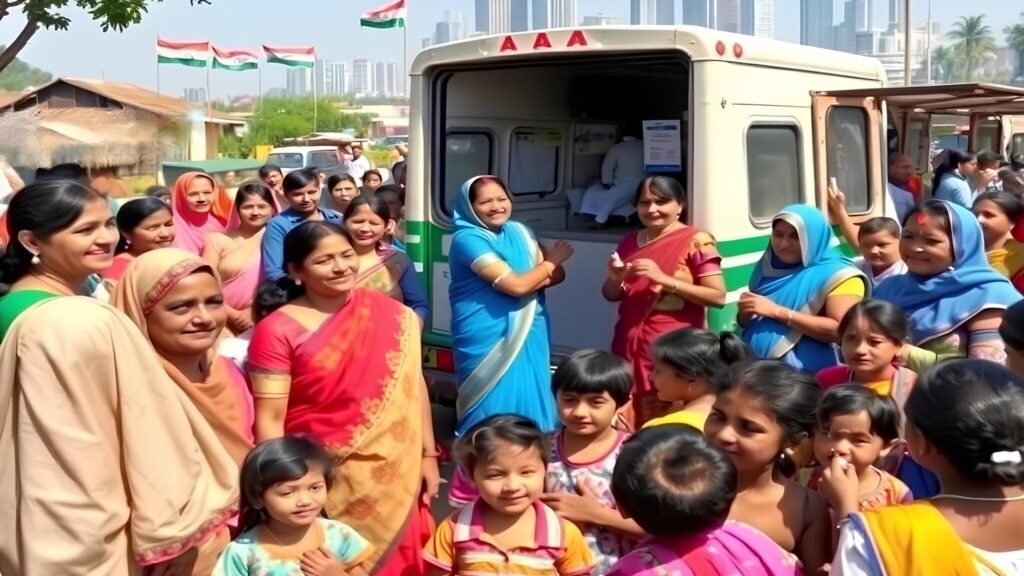
Programs like the Peer Educator initiative train adolescents to educate their peers on issues such as nutrition, reproductive health, and mental well-being. The Arogya Sakhi model trains rural women as community health educators, bridging knowledge gaps in underserved regions.
Health Communication During Crises.
COVID-19 underscored the importance of rapid, accurate, and multilingual health messaging. Government helplines, WhatsApp chatbots, community radio, and public service announcements played a vital role in disseminating preventive measures and countering misinformation.
Challenges and Gaps.
- Low media and health literacy among marginalized groups hinder the uptake of information.
- Rural and remote populations often lack consistent access to digital health resources.
- Language diversity and cultural beliefs require highly customized messaging.
Future Directions.
AI-driven health bots, public–private partnerships, and continuous digital health innovation are expected to reshape the future of health communication by making it more equitable, accessible, and responsive to diverse population needs. Artificial intelligence-powered chatbots and virtual health assistants can provide reliable, real-time health information, answer common medical queries, support appointment scheduling, remind patients about medications, and facilitate self-management of chronic diseases. These technologies have the potential to reduce barriers to healthcare access, particularly in underserved and remote communities where healthcare resources are limited.
At the same time, public–private partnerships will play a pivotal role in accelerating digital health transformation by bringing together governments, healthcare institutions, technology companies, academic organizations, and civil society. Such collaborations can strengthen digital infrastructure, promote innovation, ensure the development of secure health information systems, and expand access to affordable digital healthcare services. Partnerships can also facilitate the integration of emerging technologies into national healthcare programmes while maintaining ethical standards and patient data privacy.
Furthermore, policy initiatives that emphasize media literacy, local-language communication, and culturally appropriate health messaging will be essential to improving public engagement and combating health misinformation. Delivering evidence-based health information in regional languages through trusted digital and traditional media channels can significantly enhance health awareness, particularly among vulnerable populations. Ongoing research in behavioral science, health communication, and digital engagement strategies will further refine personalized interventions that encourage healthy behaviors and informed decision-making.
Collectively, these advancements have the potential to create a more inclusive, patient-centred, and resilient health communication ecosystem, ultimately improving health literacy, reducing disparities in healthcare access, and strengthening public health outcomes at both national and global levels.
References:
- “Health Promotion & Education | Central Health Education Bureau,” Ministry of Health & Family Welfare, 2019
- “Disease Awareness Campaigns in India,” GSK, 2025.
- “India Hypertension Campaign Materials,” Global Health Advocacy Incubator, 2024.
- “Good, Replicable and Innovative Practices,” National Health Mission, 2025.
- “India’s Healthcare Communication Landscape: A System in Urgent Need of Modernisation,” Elets eHealth, May 2025.
About The Author


