
Neurological problems affect millions of people worldwide and can range from mild, temporary symptoms to severe, life-altering conditions. Despite their prevalence, neurological disorders are often misunderstood or ignored until symptoms become severe. Early awareness of neurological symptoms and timely medical attention can significantly improve outcomes, prevent disability, and even save lives.
This article aims to raise general awareness of neurological problems, explain common warning signs, highlight common neurological disorders, and clearly outline when to seek medical help.
Understanding Neurological Problems.
Neurological problems occur when there is dysfunction in the brain, spinal cord, or peripheral nerves. These systems control everything from movement, sensation, speech, memory, and vision to breathing and heartbeat. Even a slight disturbance in neurological function can significantly affect daily life.
Neurological disorders may be acute (sudden onset, like stroke or head injury) or chronic (long-term conditions such as epilepsy, Parkinson’s disease, or multiple sclerosis). Some are reversible with early treatment, while others require lifelong management.
Why Neurological Awareness Is Important.
Many neurological conditions progress silently. People often dismiss early symptoms as stress, fatigue, aging, or lifestyle issues. Unfortunately, delayed diagnosis can lead to permanent damage.
Awareness helps in:
- Early detection and diagnosis
- Timely treatment and better recovery
- Prevention of complications and disability
- Improved quality of life
Understanding neurological health is not only important for patients but also for caregivers and families.
Common Warning Signs of Neurological Problems
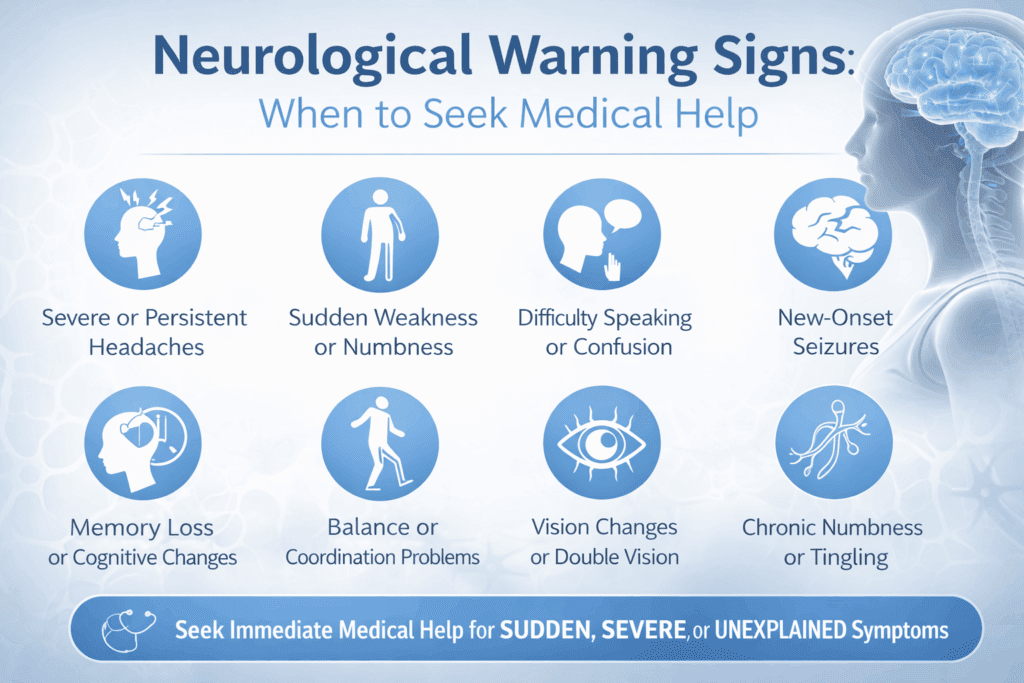
Recognizing early neurological symptoms is crucial. You should never ignore the following signs, especially if they are new, worsening, or sudden:
1. Persistent Headaches
Frequent or severe headaches, especially those that differ from usual patterns, may indicate migraines, brain tumours, infections, or elevated intracranial pressure.
2. Sudden Weakness or Numbness
Weakness or numbness in the face, arm, or leg, especially on one side of the body, can be an early sign of stroke or nerve damage.
3. Difficulty Speaking or Understanding Speech
Slurred speech, difficulty finding words, or confusion may signal a stroke, brain injury, or neurological disease.
4. Seizures or Convulsions
A seizure is a clear neurological symptom and always requires medical evaluation, even if it happens only once.
5. Memory Loss and Cognitive Changes
Frequent forgetfulness, confusion, difficulty concentrating, or personality changes may be early signs of Alzheimer’s disease or other cognitive disorders.
6. Balance and Coordination Problems
Frequent falls, dizziness, or loss of coordination may indicate problems with the cerebellum, inner ear, or peripheral nerves.
7. Vision Problems
Blurred vision, double vision, sudden vision loss, or abnormal eye movements may be neurological in origin.
8. Chronic Pain or Tingling
Burning, tingling, or electric-shock-like pain may indicate nerve disorders such as neuropathy.
Common Neurological Disorders.
Understanding common neurological problems helps people identify symptoms early.
Stroke.
A stroke occurs when blood flow to the brain is interrupted. It is a medical emergency. Classic stroke symptoms include facial drooping, arm weakness, and speech difficulty.
Epilepsy.
Epilepsy is a chronic condition characterized by recurrent seizures. Proper diagnosis and medication allow many patients to lead everyday lives.
Migraine.
Migraine is more than a headache. It is a neurological disorder often associated with nausea, light sensitivity, and visual disturbances.
Parkinson’s Disease.
Parkinson’s disease affects movement and is characterized by tremors, stiffness, slowness, and balance problems.
Alzheimer’s Disease and Dementia.
These conditions affect memory, thinking, and behaviour. Early recognition allows better symptom management and planning.
Peripheral Neuropathy.
This condition involves damage to peripheral nerves, often due to diabetes, vitamin deficiencies, infections, or toxins.
Risk Factors for Neurological Problems.
Several factors increase the risk of neurological disorders:
- High blood pressure
- Diabetes
- Smoking and alcohol use
- Sedentary lifestyle
- Poor sleep
- Chronic stress
- Head injuries
- Genetic predisposition
- Nutritional deficiencies (especially vitamin B12)
Managing these risk factors is vital to neurological health.
When to Seek Immediate Medical Help.
You should seek urgent medical attention if you or someone around you experiences:
- Sudden weakness or paralysis
- Sudden confusion or difficulty speaking
- Loss of consciousness
- New-onset seizures
- Severe head injury
- Sudden severe headache (“worst headache of life”)
- Sudden vision loss
- Loss of bladder or bowel control with weakness
Delaying care in such situations can result in permanent brain damage or death.
When to See a Neurologist.
Consult a neurologist if you experience:
- Recurrent headaches or migraines
- Repeated fainting or seizures
- Chronic numbness or tingling
- Progressive memory loss
- Tremors or movement difficulties
- Unexplained weakness or fatigue
- Persistent dizziness or imbalance
Early specialist consultation often prevents disease progression.
Prevention and Brain Health Tips.
While not all neurological problems can be prevented, adopting healthy habits reduces risk:
- Control blood pressure, sugar, and cholesterol
- Maintain a balanced diet rich in fruits, vegetables, and omega-3 fatty acids
- Exercise regularly
- Avoid smoking and excessive alcohol use
- Get adequate sleep
- Manage stress through mindfulness or relaxation techniques
- Protect the head during travel and sports
- Seek regular health check-ups
Breaking the Stigma Around Neurological Disorders.
Many neurological conditions are associated with stigma, fear, and misinformation. This often leads to delayed treatment and social isolation. Neurological disorders are medical conditions—not signs of weakness or mental failure. Open discussion, education, and empathy are essential for improving outcomes and quality of life.
Neurological problems can affect anyone at any age. Early recognition of neurological symptoms and timely medical intervention make a profound difference in outcomes. Understanding warning signs, knowing when to seek help, and maintaining neurological health through preventive care are essential steps toward a healthier life.
Awareness is the first and most powerful tool in protecting brain and nerve health.
About The Author


