
World Tuberculosis Day: Why Tuberculosis Still Matters Today.
World Tuberculosis Day is observed annually on 24 March to raise awareness about Tuberculosis, a major infectious disease that continues to affect millions globally. The day commemorates the discovery of the bacterium Mycobacterium tuberculosis by Dr. Robert Koch in 1882, which made diagnosis and treatment possible.
Despite being preventable and curable, Tuberculosis remains one of the leading public health concerns, especially in developing countries. According to the World Health Organization Global Tuberculosis Report 2023, nearly 10.6 million people worldwide developed Tuberculosis, and India alone contributed approximately 27% of the global burden.
World Tuberculosis Day is not only about awareness but also about strengthening commitment towards elimination through better diagnosis, treatment, nutrition, and social support.
Burden of Tuberculosis in India: Data and Public Health Significance.
India carries the highest Tuberculosis burden globally, making elimination both a public health and development priority.
Key Statistics Relevant to India
- Around 2.8 million new Tuberculosis cases are reported annually in India.
- Tuberculosis causes nearly 4–5 lakh deaths every year in the country.
- India contributes to more than one-fourth of global Tuberculosis cases.
- Drug-resistant Tuberculosis cases are increasing, creating treatment challenges.
- Tuberculosis commonly affects individuals in the economically productive age group (15–45 years).
The economic impact is significant, as loss of income, long treatment duration, and social stigma increase the burden on families.
India has committed to eliminating Tuberculosis by 2025, which is five years ahead of the global Sustainable Development Goal target of 2030.
Understanding Tuberculosis: Causes, Transmission, and Risk Factors.
Tuberculosis primarily affects the lungs but may also affect other organs such as the brain, lymph nodes, bones, and kidneys.
- How Tuberculosis Spreads.
Tuberculosis spreads through air when an infected person coughs, sneezes, or speaks. People living in close contact with infected individuals have a higher risk of developing infection.
- Common Symptoms of Tuberculosis
Early identification of symptoms is essential to prevent complications and spread.
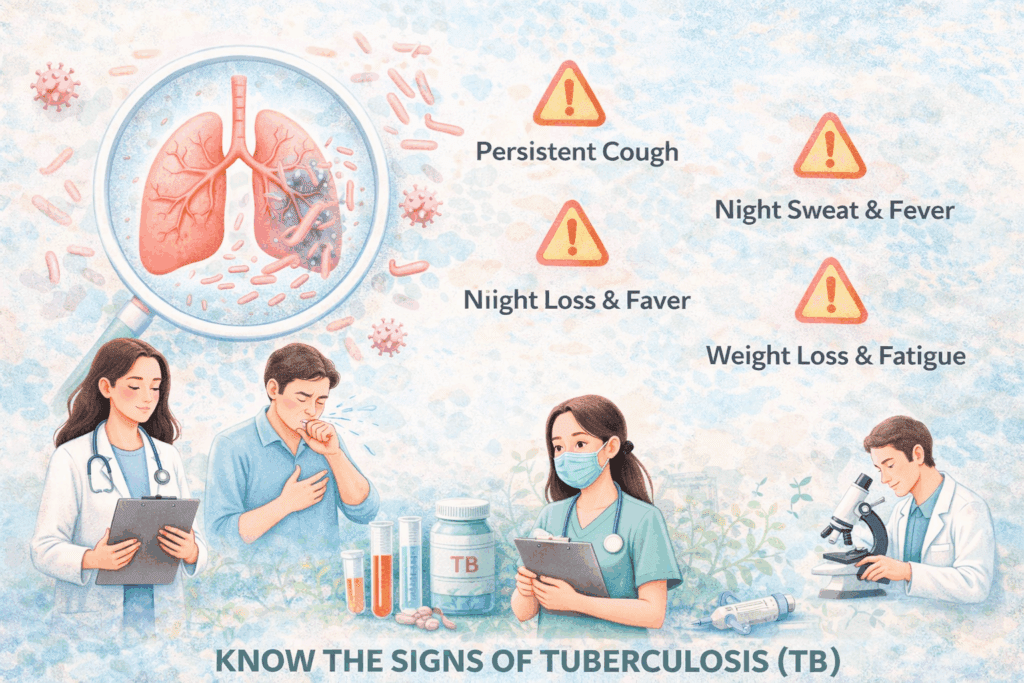
- Persistent cough lasting more than 2–3 weeks
- Fever, often with evening rise
- Night sweats
- Sudden weight loss
- Loss of appetite
- Fatigue and weakness
- Chest pain or breathlessness
- Blood in sputum in advanced stages
Symptoms may initially appear mild, leading to a delay in diagnosis.
Government Programmes for Tuberculosis Elimination in India.
India has implemented comprehensive policies and programmes to reduce Tuberculosis incidence and mortality.
1. National Tuberculosis Elimination Programme (NTEP)
The National Tuberculosis Elimination Programme is the primary initiative to eliminate Tuberculosis through early diagnosis, free treatment, and patient support.
Key Components of NTEP
- Free Tuberculosis testing across government health facilities
- Universal drug susceptibility testing
- Free anti-Tuberculosis medicines
- Digital patient monitoring through the Nikshay portal
- Focus on drug-resistant Tuberculosis management
The programme ensures equitable access to quality treatment across rural and urban areas.
2. Importance of DOTS Strategy in Tuberculosis Control
DOTS (Directly Observed Treatment, Short-course) is globally recognized as an effective strategy for Tuberculosis treatment adherence.
Key Elements of DOTS Strategy
- Political and administrative commitment
- Early diagnosis using sputum testing and molecular methods
- Standardized treatment protocol for all patients
- Direct observation of medication intake to ensure adherence
- Continuous and uninterrupted drug supply
Treatment typically lasts 6 to 9 months, and adherence is critical. Incomplete treatment can lead to multidrug-resistant Tuberculosis, which is more complex and costly to treat.
DOTS ensures that patients complete their medication under supervision, increasing cure rates and reducing relapse.
3. Nikshay Poshan Yojana: Nutritional Support for Patients
Nutrition plays an essential role in recovery from Tuberculosis.
Under Nikshay Poshan Yojana:
- Financial assistance of ₹500 per month is provided to Tuberculosis patients.
- Direct benefit transfer improves compliance with treatment.
- Nutritional support improves immunity and recovery outcomes.
Malnutrition weakens the immune system, increasing susceptibility to Tuberculosis.
4. BCG Vaccination Programme
The BCG vaccine is provided to children under India’s Universal Immunization Programme.
Benefits include:
- Protection against severe forms of Tuberculosis in children
- Reduction in complications such as Tuberculosis meningitis
- Long-term community protection
Vaccination plays a preventive role in Tuberculosis control.
Socio-Cultural Aspects of Tuberculosis.
Tuberculosis is strongly influenced by social determinants such as poverty, malnutrition, overcrowding, and lack of awareness.
Major Socio-Cultural Challenges
- Social stigma associated with Tuberculosis diagnosis
- Fear of discrimination in the workplace or community
- Delay in seeking medical care
- Lack of awareness about symptoms and treatment availability
- Gender-related barriers affecting access to care
In many communities, Tuberculosis patients hesitate to disclose their illness due to fear of social isolation. This leads to delayed treatment and increased infection spread.
Addressing stigma is essential to improving early diagnosis and treatment adherence.
Importance of Early Diagnosis and Treatment Adherence.
Early diagnosis is the most effective strategy for controlling the spread of tuberculosis.
- Benefits of Early Detection
- Reduces transmission within families and communities
- Improves treatment success rate
- Prevents the development of drug-resistant Tuberculosis
- Reduces long-term complications
- Improves quality of life
Advanced diagnostic technologies such as molecular tests help detect Tuberculosis quickly and accurately.
- Public Health Approach to Tuberculosis Elimination
Tuberculosis elimination requires a multi-sectoral approach combining healthcare services, nutrition, social awareness, and policy support.
Key Focus Areas
- Strengthening primary healthcare systems
- Improving nutrition levels
- Increasing public awareness
- Reducing stigma and discrimination
- Expanding access to diagnostic facilities
- Promoting treatment adherence
Community participation is essential for the successful implementation of programmes.
Way Forward: India’s Roadmap for Tuberculosis Elimination.
India’s target to eliminate Tuberculosis by 2025 requires sustained commitment and collaboration between the government, healthcare institutions, and communities.
Strategic Priorities
- Early diagnosis and screening programmes
- Digital tracking of patients through the Nikshay portal
- Strengthening laboratory infrastructure
- Addressing socio-economic determinants
- Improving awareness at the community level
- Ensuring uninterrupted drug supply
Elimination of Tuberculosis requires addressing both medical and social determinants of health.
World Tuberculosis Day emphasizes the need for continued awareness, early diagnosis, and treatment adherence to eliminate Tuberculosis.
Government programmes such as NTEP, DOTS strategy, nutritional support schemes, and vaccination initiatives demonstrate India’s commitment to controlling Tuberculosis.
However, addressing socio-cultural challenges such as stigma, poverty, and lack of awareness is equally important.
With coordinated efforts and sustained commitment, Tuberculosis can be prevented, treated, and eventually eliminated, leading to healthier communities.
About The Author


