

In today’s fast-paced and demanding world, yoga has gained immense popularity as a symbol of health, balance, and inner peace. Social media platforms are filled with visuals of perfect postures, wellness retreats, and transformation stories promising quick results. While this growing awareness is encouraging, an important truth is often overlooked: yoga works best as a complementary practice, not as a magical cure or a mechanical routine to be completed every day.
Yoga, especially in the context of kriya, is much more than physical exercise. It is a gentle and meaningful process of self-care, inner purification, and awareness. When combined with medical advice and healthy lifestyle practices, yoga can contribute significantly to overall well-being. However, it should not be viewed as a replacement for professional medical treatment in case of illness or acute health concerns.
Kriya Yoga Beyond the Mat.
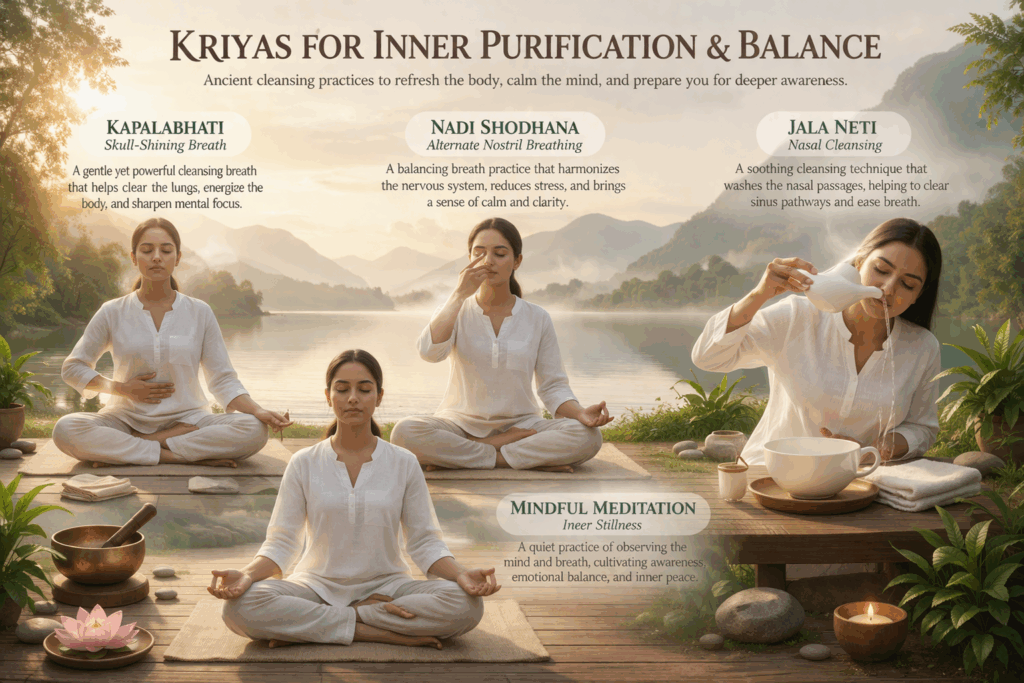
Traditional yoga philosophy describes yoga as a holistic system that helps calm the mind and improve clarity of thought. Kriya yoga refers to practices that help cleanse and prepare the body and mind for deeper balance and awareness. These include pranayama (breathing techniques), gentle asanas (postures), and simple cleansing practices that support inner harmony.
In modern times, yoga is often reduced to a fitness activity focused only on flexibility or calorie burning. While physical benefits are valuable, the deeper purpose of yoga is to develop awareness of breath, posture, and inner sensations. When yoga becomes just another task to finish in a busy day, it loses its calming essence.
True kriya yoga encourages practicing with patience, mindfulness, and comfort. Even 10–15 minutes of conscious breathing, stretching, or meditation can create meaningful benefits. The intention is not perfection but connection with one’s breath, body, and mind.
The Complementary Role: Yoga as Alternative Therapy.
Scientific research increasingly supports the benefits of yoga in improving both physical and mental health. Regular practice can help reduce stress, improve sleep quality, enhance flexibility, and support emotional well-being.
Yoga has been shown to support the management of:
- Stress and anxiety
- Mild depression
- Chronic pain conditions
- Back and neck discomfort
- Lifestyle disorders such as hypertension
- Sleep disturbances
- Muscle stiffness and fatigue
By calming the nervous system and improving breathing patterns, yoga helps the body adapt better to everyday stress. However, it is important to remember that these benefits are supportive rather than curative.
For example, a person experiencing severe pain, injury, sudden dizziness, or symptoms of serious illness should first seek medical evaluation. Once medical advice is obtained, yoga can play an important role in recovery, rehabilitation, and long-term health maintenance.
Many modern hospitals and wellness centres now integrate yoga with conventional medicine, reflecting a balanced understanding that yoga works best as a complementary therapy rather than an alternative to clinical treatment.
Why Yoga Should Not Feel Like a Task.
In today’s productivity-driven culture, even wellness activities sometimes become part of a checklist. Strict routines or unrealistic fitness goals may create pressure instead of peace. When yoga is approached as an obligation, it can lead to frustration and loss of motivation.
Kriya yoga encourages a different perspective that practice should feel natural and adaptable to individual lifestyle. A short, mindful session is often more beneficial than a long, forced practice.
Even simple practices can be meaningful:
- Gentle stretching for relaxation
- Slow breathing exercises such as Nadi Shodhana
- Short meditation for mental clarity
- Mindful awareness of posture and movement
When practiced with ease and consistency, yoga becomes a supportive companion rather than a burden.
Practical Guidelines to Practice Yoga with its True Essence.
Yoga becomes most effective when practiced thoughtfully and responsibly.
- Seek medical guidance for acute symptoms:
Sudden pain, fever, injury, dizziness, or unexplained symptoms require professional medical evaluation before starting any exercise routine. - Use yoga as supportive therapy, not replacement:
Yoga helps improve recovery, reduce stress, and maintain balance, but it should not replace necessary medical treatments or medications. - Keep the practice flexible and realistic:
Even short daily practice can create long-term benefits. Consistency is more important than intensity. - Focus on awareness rather than performance:
Paying attention to breath and comfort is more beneficial than trying to achieve perfect postures. - Consult qualified professionals:
Guidance from trained yoga instructors or healthcare professionals ensures safe and appropriate practice, especially for individuals with existing health conditions.
These principles help maintain the authentic purpose of yoga and prevent unnecessary strain or unrealistic expectations.
Embracing Harmony for Lasting Wellness.
When understood correctly, yoga becomes a gentle and supportive practice that enhances physical, emotional, and mental well-being. It does not aim to replace medicine but complements it by improving resilience, relaxation, and awareness.
Yoga as kriya focuses on subtle transformation, improving breathing patterns, calming the mind, and encouraging self-reflection. Over time, this creates a sense of balance that supports everyday health.
Rather than approaching yoga as a duty, it can be viewed as a small daily gift to oneself. Even a few minutes of mindful practice can create positive changes in energy, focus, and emotional stability.
Blending traditional wisdom with modern medical science creates a balanced approach to wellness. Yoga supports the journey toward better health, helping individuals feel more connected, calm, and aware.
Roll out the mat not as a responsibility, but as an opportunity for self-care. With patience and consistency, yoga can become a meaningful companion in maintaining long-term well-being.
About The Author


