
Most people experience headaches from time to time. Stress, lack of sleep, dehydration, eye strain, and migraines are among the most common causes. However, not every headache is harmless. In rare but serious cases, an intense and sudden headache may signal a potentially life-threatening condition known as a brain aneurysm.
Often described by survivors as the “worst headache of my life,” this warning sign should never be ignored. While many brain aneurysms remain silent throughout life, some can rupture unexpectedly, leading to a medical emergency that requires immediate attention.
Understanding what a brain aneurysm is, recognizing its symptoms, and knowing when to seek help can make a significant difference in outcomes.
What Is a Brain Aneurysm?
A brain aneurysm is a weakened area in the wall of a blood vessel in the brain. Over time, pressure from blood flow may cause the weakened section to bulge outward, creating a balloon-like swelling.
Many aneurysms remain small and never cause symptoms. Some are discovered incidentally during imaging performed for unrelated reasons. However, larger aneurysms or those at risk of rupture require close monitoring and sometimes treatment.
The greatest concern arises when an aneurysm ruptures, causing bleeding around the brain, a condition known as subarachnoid hemorrhage. This is a serious medical emergency that can lead to permanent neurological damage, disability, or even death if not treated promptly.
Why Brain Aneurysms Are Often Called “Silent Threats”.
One of the challenges associated with brain aneurysms is that they frequently develop without obvious symptoms.
Many individuals may have an aneurysm for years without realizing it. Symptoms often appear only when the aneurysm becomes large enough to press on surrounding nerves or when leakage or rupture occurs.
This silent nature makes awareness especially important.
Warning Signs That Should Never Be Ignored.
The most widely recognized symptom of a ruptured brain aneurysm is a sudden, explosive headache.
People often describe it as:
- The worst headache of their life
- A thunderclap headache
- A headache that reaches maximum intensity within seconds
In addition to a severe headache, other symptoms may occur.
Common Warning Signs Include:
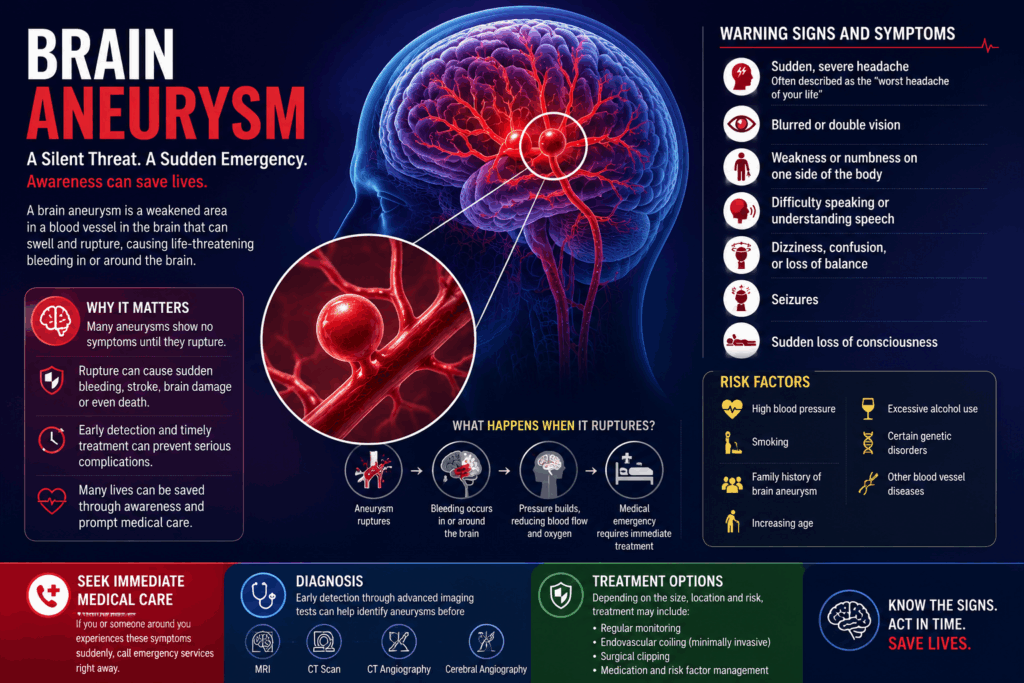
- Sudden and severe headache
- Blurred or double vision
- Weakness or numbness on one side of the body
- Difficulty speaking or understanding speech
- Dizziness or loss of balance
- Confusion or altered mental status
- Sensitivity to light
- Neck stiffness
- Nausea and vomiting
- Seizures
- Sudden loss of consciousness
The appearance of one or more of these symptoms requires urgent medical evaluation.
Who Is at Risk?
While brain aneurysms can occur in anyone, certain factors may increase the likelihood of developing one.
Risk Factors Include:
- High blood pressure
- Smoking
- Family history of brain aneurysms
- Advancing age
- Excessive alcohol consumption
- Certain inherited connective tissue disorders
- Previous aneurysm history
- Chronic vascular disease
Women are also slightly more likely than men to develop brain aneurysms, particularly after middle age.
Understanding these risk factors can help individuals make informed decisions regarding lifestyle and preventive health care.
Unruptured Brain Aneurysms: Symptoms Can Be Subtle.
Not all aneurysms rupture immediately. Larger unruptured aneurysms may cause symptoms by compressing nearby brain structures.
Possible Symptoms of an Unruptured Aneurysm:
- Persistent headache
- Eye pain
- Vision changes
- Drooping eyelid
- Dilated pupil
- Facial numbness
- Difficulty concentrating
Because these symptoms can resemble other neurological conditions, proper medical evaluation is essential.
How Are Brain Aneurysms Diagnosed?
Advances in medical imaging have significantly improved the ability to detect aneurysms early.
Doctors may recommend imaging studies based on symptoms, medical history, and neurological examination findings.
Common Diagnostic Tests Include:
- Magnetic Resonance Imaging (MRI)
- Magnetic Resonance Angiography (MRA)
- Computed Tomography (CT Scan)
- CT Angiography (CTA)
- Cerebral Angiography
These investigations help identify the location, size, and characteristics of the aneurysm, allowing specialists to determine the most appropriate management strategy.
Treatment Options for Brain Aneurysms.
Treatment depends on several factors, including the aneurysm’s size, location, patient’s age, overall health, and risk of rupture.
Management Approaches May Include:
Observation and Monitoring.
Small aneurysms with low rupture risk may simply require regular monitoring through imaging and clinical follow-up.
Endovascular Coiling.
A minimally invasive procedure in which tiny coils are inserted into the aneurysm to prevent blood flow into the weakened area.
Surgical Clipping.
A neurosurgical procedure where a clip is placed at the base of the aneurysm to stop blood flow and prevent rupture.
Supportive Neurological Care.
Patients with ruptured aneurysms often require intensive monitoring, critical care management, and rehabilitation services.
Modern treatment approaches have significantly improved survival and recovery rates when intervention is performed early.
Can Brain Aneurysms Be Prevented?
While not all aneurysms can be prevented, reducing modifiable risk factors may lower the likelihood of aneurysm formation or rupture.
Healthy Lifestyle Measures Include:
- Maintaining healthy blood pressure
- Avoiding smoking and tobacco use
- Limiting excessive alcohol consumption
- Regular physical activity
- Managing cholesterol levels
- Following a balanced diet
- Attending regular health checkups
Lifestyle modifications contribute not only to brain health but also to overall cardiovascular well-being.
Why Early Recognition Matters
Time is one of the most critical factors in neurological emergencies.
Prompt diagnosis and treatment can:
- Prevent catastrophic bleeding
- Reduce the risk of permanent neurological injury
- Improve survival rates
- Enhance recovery outcomes
- Minimize long-term disability
Unfortunately, many individuals dismiss severe headaches as migraines or stress-related discomfort. While most headaches are not caused by aneurysms, any sudden and unusually severe headache deserves immediate medical attention.
When Should You Seek Emergency Medical Care?
Do not delay seeking help if you experience:
- Sudden explosive headache
- Loss of consciousness
- New neurological symptoms
- Sudden vision changes
- Weakness on one side of the body
- Difficulty speaking
- Seizures
In neurological emergencies, early intervention can save lives.
Most headaches are harmless and resolve with rest, hydration, or routine treatment. However, a sudden and severe headache should never be ignored. In rare cases, it may be the body’s warning signal for a brain aneurysm, a condition that can become life-threatening within minutes if rupture occurs.
Awareness remains one of the most powerful tools in preventing complications. Recognizing warning signs, understanding risk factors, and seeking immediate medical attention when symptoms occur can make a critical difference.
When it comes to brain health, listening to warning signs and acting promptly can be lifesaving.
About The Author


