

India’s summers bring relentless heat, with heatwaves pushing temperatures above 45°C in many places. Every year, numerous heat-related illnesses and deaths are reported, making it increasingly important to adopt smart and sustainable cooling strategies. Yoga, when practiced mindfully, offers a natural and holistic shield against this scorching climate. Rooted in ancient wisdom, yoga helps regulate body temperature, improve internal hydration, calm the nervous system, and maintain emotional balance even during extreme heat conditions. By tuning into the body’s signals during asanas (postures), pranayama (breathing techniques), and aahaar (diet), yoga can become a complete summer survival toolkit.
Cooling Asanas: Gentle Flows for Heat Relief.
Heatwaves drain the body’s energy, often causing fatigue, dehydration, irritability, headaches, and mental exhaustion. Summer yoga is not about intense endurance or physically demanding routines; it is about intelligent surrender and mindful movement. By practicing gently and consciously, one can not only survive heatwaves but also remain physically refreshed and mentally calm.
The focus during summer should remain on gentle, cooling, and restorative postures combined with pranayama techniques that help regulate body temperature and reduce overheating risks. Vigorous yoga styles, power yoga, or rapid transitions should be avoided as they increase internal heat and strain the body further. Yoga practice is most beneficial during early morning hours between 5–7 AM or in the evening after sunset, when the surrounding temperature naturally drops. Practicing on a lightweight cotton mat in a shaded and breezy space creates a more cooling environment for the body and mind.
Appropriate Clothing for Summer Yoga.
Clothing plays a surprisingly important role during yoga practice in heatwaves. Breathable and moisture-wicking fabrics support proper airflow, prevent overheating, and allow free movement during asanas. Traditionally, yogis preferred natural fibers such as cotton mulmul because of their cooling properties, and even today cotton and linen remain among the best choices for summer yoga.
Loose and light-colored clothing is ideal because lighter shades reflect sunlight rather than absorb it. Tight synthetic fabrics such as polyester or restrictive spandex can trap heat, increase sweating, and sometimes cause skin irritation or rashes. Comfortable ankle-length pants, capris, breathable T-shirts, airy kurtas, or loose tops provide ease during forward bends and stretching movements. The basic principle remains simple: wear loose, breathable cotton or linen clothing that keeps the body cool and relaxed throughout the practice.
Restorative, Cooling Poses.
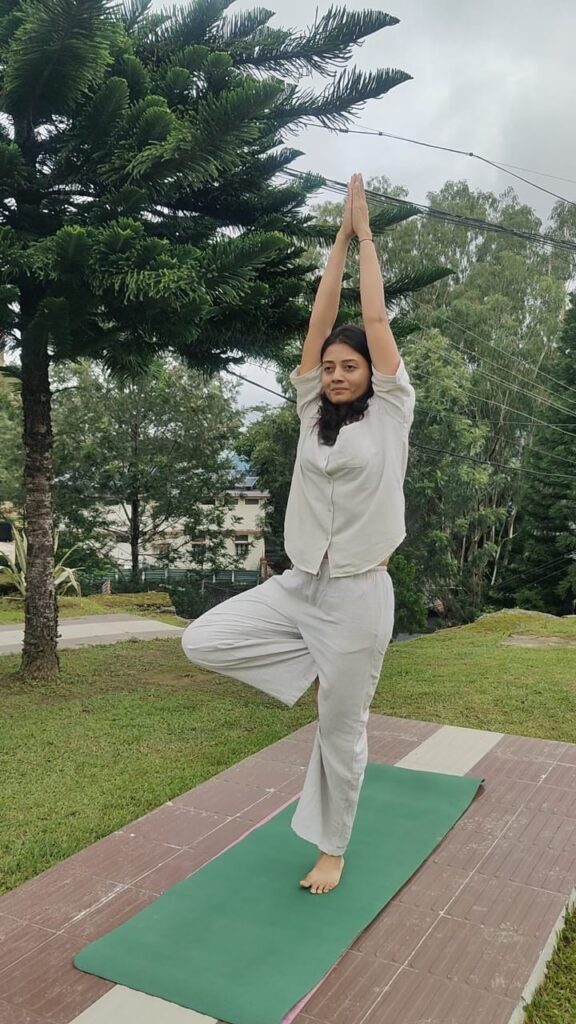
Certain restorative yoga poses are especially effective in calming the nervous system and lowering body heat naturally.
Shashankasana (Child’s Pose) helps relieve dizziness, exhaustion, and overheating by gently relaxing the spine and calming the mind.
Prasarita Padottanasana (Wide-Legged Forward Bend) encourages blood circulation while gently lowering stress and blood pressure.
Supta Baddha Konasana (Reclining Butterfly Pose) deeply relaxes the body and promotes internal cooling, especially when supported with cushions under the thighs.
Savasana (Corpse Pose) remains one of the most powerful relaxation postures. Slow breathing in Savasana has been shown to reduce body temperature and calm mental restlessness.
Viparita Karani (Legs-Up-the-Wall Pose) is especially soothing during hot weather as it drains heat from the head, reduces fatigue, and eases light-headedness.
Light Energizing Poses
While restorative poses dominate summer yoga practice, a few gentle energizing postures help maintain circulation and flexibility without generating excess heat.
Baddha Konasana (Butterfly Pose) calms the nerves and improves circulation.
Anjaneyasana (Low Lunge) refreshes the body when practiced slowly with mindful breathing.
Saral Matsyasana (Easy Fish Pose) opens the chest and encourages deeper, cooling breaths.
Forward bends like Paschimottanasana and Shashankasana can be paired with Sheetali Pranayama to cool digestive fire and relax the body further. Gentle spinal movements such as Cat-Camel stretches help lubricate the spine and improve mobility. A 20–30 minute yoga session in a breezy environment while wearing loose cotton clothing is generally sufficient during summer. Hydrating with room-temperature mint or cucumber-infused water before and after practice further supports cooling and hydration.
Cooling Pranayama and Mudras.
Pranayama becomes especially powerful during heatwaves because breathing techniques directly influence body temperature and nervous system balance.
Sheetali Pranayama (Cooling Breath) involves inhaling through a rolled tongue and exhaling through the nose. It is known to cool the body and reduce internal heat significantly.
Chandra Bhedana (Left Nostril Breathing) balances lunar energy and helps reduce anger, acidity, and excess pitta.
Sheetkari Pranayama (Hissing Breath) calms both the body and mind through slow, cooling breaths.
Kaki Mudra (Crow Beak Mudra) soothes the nervous system and promotes mental relaxation.
Practicing these breathing techniques during the evening hours supports better sleep and reduces heat-induced restlessness or insomnia.
Yoga Nidra for Heatwave Recovery.
Yoga Nidra, often called yogic sleep, offers profound mental and physical cooling. This guided meditation practice induces deep relaxation without physical movement and helps reset the body after heat exposure. Practicing Yoga Nidra in Savasana with closed eyes and calm breathing allows the nervous system to recover from stress and fatigue. Evening sessions combined with soothing oils such as sandalwood on the forehead create a deeply calming effect and improve sleep quality during hot nights.
Aahaar: Diet to Quench Inner Fire.
Yoga during summer is incomplete without a cooling and sattvic diet. Light, hydrating foods such as cucumbers, melons, coconut water, mint, and coriander help the body remain cool and balanced. Simple meals like ghee-laced khichdi with fennel or cardamom support digestion without increasing internal heat. Spicy, fried, oily, and overly sour foods should be minimized during heatwaves.
Mindful eating practices are equally important. Slow chewing, calm eating environments, early dinners, and cooling drinks like buttermilk, sattu, bel sharbat, and herbal teas contribute greatly to summer wellness and hydration.
Precautions for Heatwave Resilience.
Summer yoga should always be approached with awareness and moderation. Practice during early morning or evening hours and avoid peak afternoon heat between 11 AM and 4 PM. Stay hydrated before and after practice and avoid intense or long-held postures during extreme weather. Most importantly, listen to the body carefully. If dizziness, nausea, weakness, or discomfort occurs, immediately rest in Balasana or Savasana, hydrate properly, and move to a cool environment.
Embrace Cool Resilience This Summer.
In scorching heatwaves, mindful yoga becomes far more than exercise — it becomes a practice of resilience, balance, and self-care. Cooling asanas, calming pranayama, Yoga Nidra, mindful diet choices, and proper precautions together create a natural defense against summer stress. Even a simple 20-minute daily practice can help the body and mind remain cooler, calmer, and healthier throughout the season.
About The Author


