
Table of Contents
Introduction
India’s 2024 healthcare budget introduced cervical cancer vaccination in india. In India’s evolving healthcare landscape, Mission Indradhanush has played a pivotal role in increasing immunization coverage nationwide. Building upon this foundation, the 2024 Union Budget introduced a landmark policy decision—the inclusion of the cervical cancer vaccination in India’s national immunization program. This bold step, aligned with World Cancer Awareness Year, marks a significant stride in strengthening women’s health in India.
Why Cervical Cancer Prevention Matters

Cervical cancer is the second most common cancer among Indian women, and it poses a growing public health challenge. According to WHO estimates, in 2020, India accounted for 21% of global cervical cancer cases and nearly 23% of deaths; more than any other country, including China.
Despite its high prevalence, cervical cancer prevention is largely preventable through timely vaccination against human papillomavirus (HPV), regular screening, and awareness. The introduction of the HPV vaccine in India’s public health system has the potential to save many lives.
Challenges in Implementing the Cervical Cancer Vaccination in India
Cost and Access Barriers
Until recently, high vaccine costs (₹2,000–₹3,000 per dose in the private sector) made access difficult, especially for low-income families. Multiple doses and cold chain logistics further added to the challenge. However, government-led negotiations and indigenous vaccine development have now opened doors for affordable public distribution.
Cultural Taboos and Low Awareness
In many parts of India, especially rural areas, social stigma around reproductive health makes discussions around HPV and cervical cancer difficult. According to NFHS-4, only 30% of eligible women have ever been screened, pointing to a massive gap in awareness and access.
Inadequate Cervical Screening in india due to Infrastructure
While screening is a key secondary prevention strategy, access to pap smears and VIA (visual inspection with acetic acid) remains limited in public facilities. Many women only seek help when symptoms are advanced.
Delivery and Coverage Issues
India’s vast geography, coupled with logistical barriers in cold chain management, poses challenges to rolling out the vaccine in remote areas. Coverage gaps risk leaving out the very population most vulnerable.
Strategic Solutions: How India Plans to Overcome These Challenges
Leveraging Technology via eVIN
The Electronic Vaccine Intelligence Network (eVIN) enables real-time cold chain tracking and inventory management. Already successful with routine immunizations, it will now be scaled to manage the distribution of the cervical cancer vaccine.
Empowering ASHA Workers
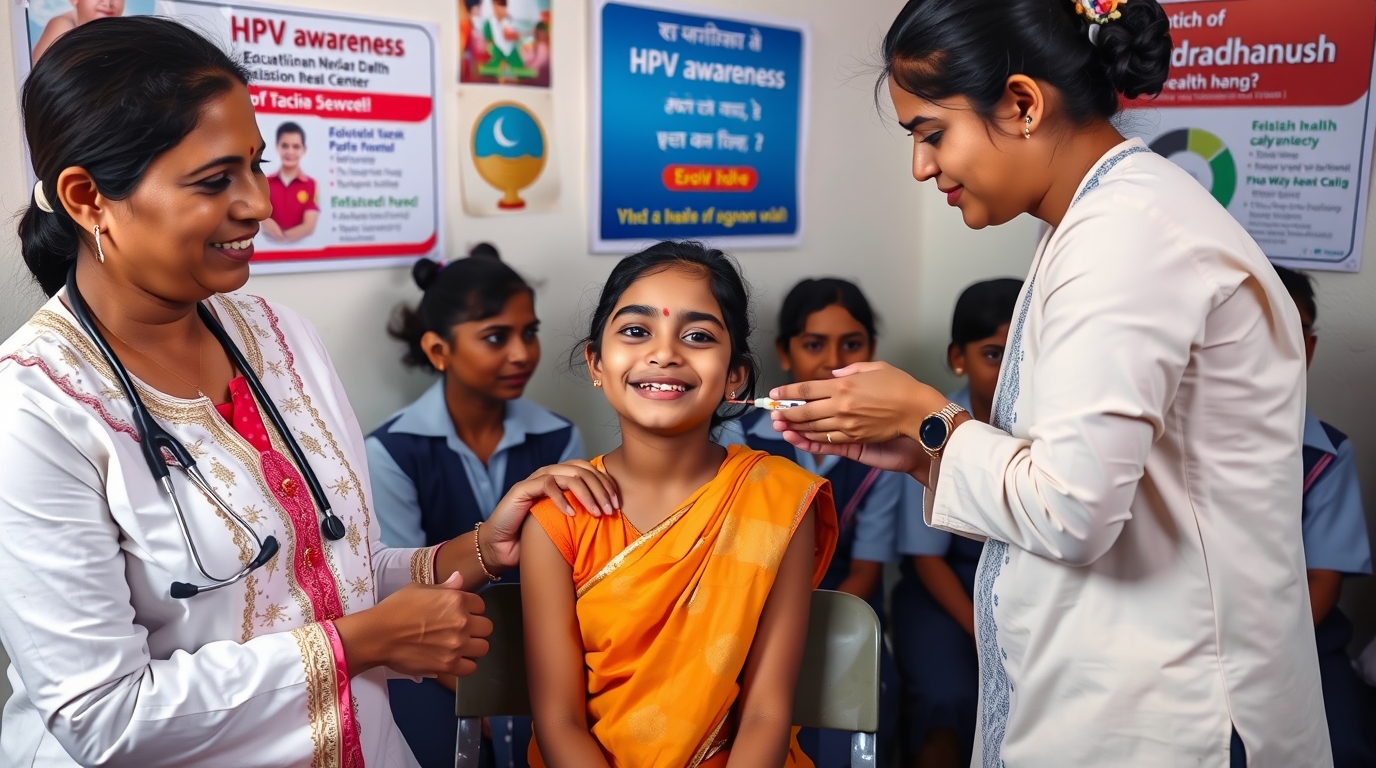
India’s 10 lakh Accredited Social Health Activists (ASHAs) are instrumental in reaching rural populations. With proper training, they can lead awareness campaigns, encourage adolescent girls and parents to opt for the HPV vaccine, and even monitor post-vaccination follow-ups.
Integrating With Existing Health Infrastructure
The government plans to administer vaccines through government hospitals, schools, and primary health centers, ensuring wide reach. Campaigns like Rashtriya Bal Swasthya Karyakram (RBSK) can be integrated to reach girls aged 9–14 years—the target age group for the vaccine.
Encouraging Public-Private Partnerships
Collaborations with vaccine manufacturers, NGOs, and international agencies like Gavi, the Vaccine Alliance, can help subsidize costs and enhance capacity-building. A cost-sharing model may help ease the financial burden on the public system.
The Road Ahead: Cervical Cancer-Free India
India’s cervical cancer vaccination initiative has the potential to prevent 90% of HPV-related cancers, according to WHO projections. With the right policies, community involvement, and technology, this can be a transformational moment for women’s health in India.
As India aims for universal health coverage by 2030, investments in preventive care, especially for marginalized groups, will be key to reducing health inequities.
Conclusion: A New Dawn for Women’s Health
The inclusion of cervical cancer vaccination in India’s healthcare mission is a strong message that women’s health is no longer a footnote—it’s a national priority. Through a mix of technology, community engagement, education, and funding, India is poised to make cervical cancer a disease of the past.
Let’s support awareness campaigns, encourage adolescent girls to get vaccinated, and create a health-literate society where no woman dies from a preventable disease.
About The Author


