
Table of Contents
The Scale of Vaccination Drive in India
India, with a population exceeding 1.4 billion, is executing the world’s largest vaccination drive. Vaccination drive in india initiative, led by the Ministry of Health and Family Welfare, aims to ensure universal vaccine access across all age groups, regions, and economic segments.
The implications of this drive go beyond disease prevention—it plays a strategic role in reshaping India’s demographic profile, improving life expectancy, reducing infant and under-5 mortality, and supporting long-term national development goals.
A Historical Foundation: The Universal Immunization Programme (UIP)
Launched in 1985, the Universal Immunization Programme (UIP) has been a cornerstone of India’s public health strategy. Vaccinating against tuberculosis, polio, diphtheria, tetanus, pertussis, hepatitis B, cervical caner and more, the UIP has helped lower childhood mortality significantly.
According to World Bank data, India’s under-5 mortality dropped from over 100 (1990) to 36 per 1,000 live births by 2019—a direct result of widespread immunization in india.
COVID-19 Vaccine Campaign: A Game Changer
India’s robust response to the COVID-19 pandemic, through Covishield and Covaxin, added muscle to the immunization in india infrastructure. The creation of an efficient cold chain, vaccine logistics, and real-time monitoring systems (e.g., CoWIN) set a new standard for future vaccine campaigns.
These innovations are now being repurposed for broader immunization in india efforts—especially in rural India, where access was previously limited.
How Vaccination is Reducing Infant and Under-5 Mortality in India
Vaccination has been a critical lever in reducing infant and under-5 Mortality in india caused by diseases like pneumonia, diarrhea, and measles.
Key Successes
- Pentavalent vaccine (covers 5 diseases) has reduced disease incidence drastically.
- Measles-Rubella Campaigns have improved immunity in children aged 9 months to 15 years.
- Polio Eradication through the Pulse Polio Programme proved India’s ability to execute mass immunization drives.
As a result, India has seen a 50% reduction in infant and under-5 mortality rates since the 1990s.
India’s Development Agenda
Achieving the Millennium Development Goals (MDGs) and Sustainable Development Goals (SDGs)
India’s success in reducing child mortality is closely tied to the Millennium Development Goals (MDGs), which included reducing child mortality and improving maternal health.
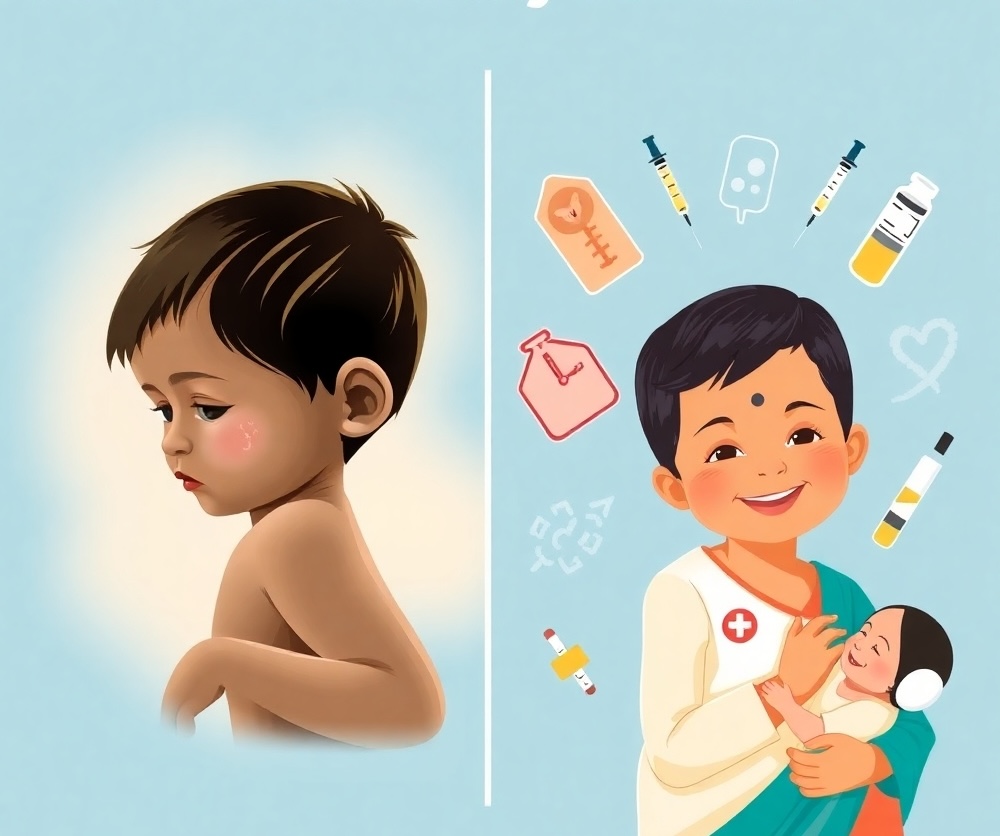
By significantly decreasing under-5 mortality rates, India is on track to meet these goals. The emphasis on childhood immunization in india has contributed to the country’s success in this area. As the MDGs phase out and the world moves toward the Sustainable Development Goals (SDGs), India continues to focus on improving health outcomes for its population. SDG 3, which aims to ensure healthy lives and promote well-being for all at all ages, has been one of the cornerstones of India’s public health policies.
Vaccination drive in India has not only enhanced immunization coverage but has also helped reduce health inequities across the country. It is particularly significant for India’s rural and marginalized communities, where access to healthcare services is often limited.
Vaccination drive in India aligns with the SDG targets for reducing maternal and child mortality. By ensuring that children are protected from preventable diseases, the country is moving closer to realizing SDG 3.2, which specifically aims to reduce the global under-5 mortality rate to at least as low as 25 per 1,000 live births.
In Summary, India’s progress in vaccination directly supports:
- MDG 4: Reduce child mortality.
- SDG 3.2: End preventable deaths of newborns and children under 5.
Rural and marginalized communities have especially benefited, thanks to the focus on equity in healthcare access. Immunization in india coverage in tribal belts, hilly terrains, and remote districts has significantly improved with programs like Mission Indradhanush and Intensified Mission Indradhanush (IMI).
Vaccination’s Influence on Indian Demography
Vaccination has a direct impact on the demographic structure of a population. With fewer children dying from preventable diseases, fertility rates tend to decrease as families no longer need to have more children to compensate for those who may not survive infancy. This shift is often accompanied by greater access to education, healthcare, and economic opportunities for women, all of which contribute to reduced fertility rates.
Moreover, as Vaccination drive in India continues to strengthen its public health systems, there is a growing focus on maternal health. Vaccinating mothers during pregnancy, especially against diseases like tetanus, contributes to maternal well-being and reduces the risk of infant death. As a result, India’s demographic profile is gradually shifting towards an older population, as people live longer, healthier lives.
India is also witnessing a demographic dividend, a phase where the proportion of the working-age population is large relative to the dependent population (children and elderly). With a reduced mortality rate, the country’s youth population is increasingly becoming healthier, more educated, and better equipped to contribute to the economy.
To summarize, Vaccination plays a vital role in shaping demographic trends:
- Reduced child mortality leads to lower fertility rates, as families gain confidence in child survival.
- Life expectancy increases, and population aging begins to emerge.
- A healthier working-age population boosts economic productivity—resulting in a demographic dividend.
India is witnessing a transition from a young, high-mortality society to a maturing population with better health outcomes and economic potential.
Challenges Ahead
Despite these impressive achievements, challenges remain. Ensuring that vaccines reach the remotest corners of the country, combating vaccine hesitancy, and addressing logistical issues related to storage and distribution are significant hurdles. However, India’s experience with large-scale immunization campaigns, such as the Pulse Polio Initiative, shows that these challenges can be overcome with strategic planning and public health outreach.
As India continues its vaccine drive, it must focus on strengthening healthcare infrastructure, particularly in rural areas, and ensuring that all citizens have equitable access to vaccines. Collaboration with international organizations and the private sector will be crucial in achieving these objectives.
Despite strong progress, several issues persist:
- Vaccine hesitancy due to misinformation and cultural beliefs.
- Logistical hurdles in reaching remote villages.
- Cold chain management for temperature-sensitive vaccines.
- Healthcare workforce shortages, especially in tribal areas.
India must invest in:
- Healthcare infrastructure
- Community-based education campaigns
- Public-private partnerships to enhance vaccine supply chains
Future Outlook
Vaccination drive in India is not just about disease prevention—it’s a long-term strategy for national growth. As vaccination improves life expectancy, workforce health, and maternal outcomes, the country is better positioned to meet both domestic policy goals and global commitments.
With continued innovation, outreach, and commitment, India can lead the way in population health transformation through immunization in indian context.
About The Author


