
Table of Contents
Introduction
Guillain-Barré Syndrome (GBS), also known as Landry’s Paralysis, is a rare but serious autoimmune disorder that affects the nervous system. In this article, we will explore the epidemiology, causes, and treatment of Guillain-Barré Syndrome (GBS) in India. It is characterized by progressive muscle weakness, sensory disturbances, and, in severe cases, respiratory failure. Although GBS is reported worldwide, its epidemiological trends in India are unique, influenced by regional infections and limited healthcare access. With the eradication of poliomyelitis, GBS has become one of the leading causes of acute flaccid paralysis in the country.
Epidemiology of GBS in India
GBS affects 1.2 to 2.3 per 100,000 people annually in India, similar to global rates. However, regional and seasonal patterns highlight its epidemiological importance. Studies have indicated that the incidence of GBS increases during monsoon and post-monsoon seasons, correlating with a rise in infections like dengue, chikungunya and gastrointestinal infections.
Findings from recent Indian studies
- Higher Risk in Males: Males are more commonly affected than females
- Age Groups Affected: The most affected age groups are young adults (20-40 years) and the elderly
- Rural Population at Greater Risk: A higher incidence in rural populations is noted due to increased exposure to infections and limited healthcare access
- Seasonal Peaks: Monsoon and post-monsoon seasons coincide with higher incidences of infections like dengue, chikungunya and gastrointestinal diseases
- Recent studies also suggest a significant increase in post-viral GBS cases, particularly after outbreaks of COVID-19 and dengue
Causes and Risk Factors
GBS is often triggered by infections that lead to an abnormal immune response. In India, common causes include:
- Campylobacter jejuni infection – A bacterial infection causing gastroenteritis, seen in 30-40% of cases.
- Viral Infections – Dengue, chikungunya, influenza, and COVID-19 are known triggers.
- Post-Vaccination Immune Response – Rarely linked to vaccines like influenza or rabies.
- Seasonal viral outbreaks have been linked to post-infectious GBS cases.
- Influenza and COVID-19 – Viral respiratory infections are known triggers.
- Surgical and Traumatic Events – Though uncommon, trauma and recent surgery may trigger an autoimmune response
Symptoms of Guillain-Barré Syndrome
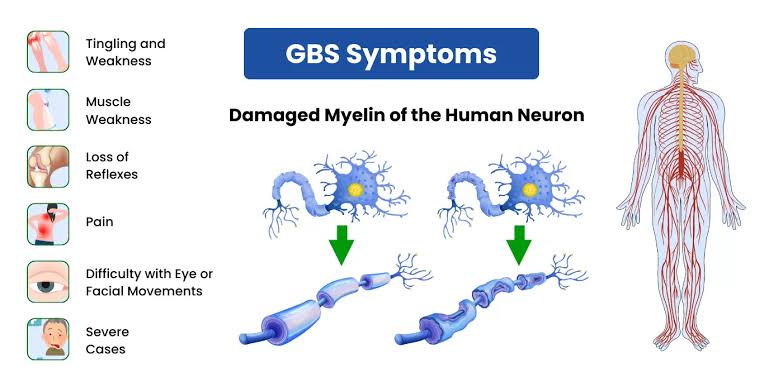
The symptoms of GBS typically develop over several days or weeks and may include:
- Progressive muscle weakness, starting in the legs and moving upwards (ascending paralysis)
- Patient present with weakness with or without paresthetic sensory symptoms
- There sensory symptoms are often worse in hands and fingers
- Sensory disturbances like tingling or numbness in the hands and feet
- There is the symmetrical weakness of lower limb which ascends proximally often from hours to several days
- Less often the pattern of weakness may be descending and may begin from upper limbs.
- Weakness in the facial and oropharyngeal muscles
- The motor weakness may subsequently involve arms, facial and oropharyngeal muscle and in severe case it may also involve respiratory muscles.
- Respiratory muscle involvement in severe cases
- Autonomic dysfunction leading to blood pressure fluctuations and irregular heart rhythms and rarely bladder dysfunction are also present.
Diagnosis of Guillain-Barré Syndrome in India
The diagnosis of GBS depends on clinical criteria supported by electrophysiological studies and CSF study findings. Early diagnosis is crucial but often delayed in rural India due to limited access to neurologists. Common diagnostic methods include:
- Clinical Examination – Assessing muscle weakness and reflex loss and presence of paresthesia.
- Nerve Conduction Studies (NCS) and Electromyography (EMG) – To detect patterns of nerve damage
- Cerebrospinal Fluid (CSF) Analysis – Elevated protein levels without increased white blood cells
- MRI of the Spine – To rule out other neurological disorders
Treatment of Guillain-Barré Syndrome in India
General supportive management is the mainstay of treatment, patients with rapidly worsening are to be observed in Hospital until the maximum extent of progression has been established. The prevention of complications among which respiratory failure and autonomic dysfunction are most important provides the best favourable chances of outcome. Treatment focuses on managing symptoms and preventing complications like respiratory failure and autonomic dysfunction. Key interventions include:
- Hospitalization and Supportive Care
- ICU care for patients with respiratory distress.
- Ventilatory support if breathing muscles weaken.
- Physiotherapy and nutritional support to prevent complications.
- Immunotherapy
- Intravenous Immunoglobulin (IVIG): The first-line treatment in India due to its availability in tertiary care hospitals.
- Plasmapheresis (Plasma Exchange): Effective for severe cases, though less accessible in rural areas
- Physiotherapy and Rehabilitation
- Muscle-strengthening exercises to aid recovery.
- Occupational therapy for regaining daily function.
- Psychological support for mental well-being.
Challenges in India
- Delayed Diagnosis and Misdiagnosis due to low awareness
- Limited Access to Specialized Care, especially in rural areas
- High Cost of IVIG Therapy, making treatment unaffordable for many. Only few centres have facility for plasmapheresis in the eligible patient group.
- Lack of Rehabilitation Centers for long-term recovery.
Conclusion
Guillain-Barré Syndrome, though rare, presents a growing health challenge in India. Early diagnosis, access to immunotherapy, and improved healthcare infrastructure are crucial to improving outcomes for GBS patients. Raising awareness and expanding affordable treatment options can significantly reduce the burden of this disease.
External References
- Guillain-Barré Syndrome Overview – National Institute of Neurological Disorders and Stroke
- WHO assists response to Guillain-Barré Syndrome in Pune
About The Author


