
Table of Contents
The COVID-19 pandemic has not only caused physical health challenges but also triggered a mental health crisis, leading to increased anxiety, depression, and poor sleep quality. Recent studies highlight how Meditation and Breathing Exercises Improve COVID-19 Recovery. The isolation of infected patients, coupled with uncertainty about disease progression, led to increased anxiety, depression, and poor sleep quality. A recent randomized control trial (RCT) published in the Indian Journal of Palliative Care explored how meditation and breathing exercises could improve the well-being of asymptomatic and mildly symptomatic COVID-19 patients under institutional isolation.
This study, conducted by Mahendru et al., examined the effects of guided meditation and breathing exercises (pranayama – Anulom Vilom/Nadi Shodhan) on stress, anxiety, depression, and sleep quality in patients. The results highlighted a statistically significant improvement in multiple health parameters, reinforcing the potential of mind-body interventions in medical care.
Why Mental Health Support is Crucial During Illness
Any disease is not just related to physical symptoms—it also triggers mental health crisis. The fear of infection, social isolation, and unpredictable outcomes led to increased psychological distress among patients. Studies show that:
- Social isolation increases depression and anxiety levels.
- Stress can weaken the immune system, making recovery slower.
- Poor mental health negatively impacts sleep quality, which is crucial for immune function.
While medical treatments focused on symptom management and recovery, there was an urgent need for complementary therapies to support mental and emotional health. During the COVID-19 pandemic, the team and I conducted extensive research that remains highly relevant in today’s healthcare scenario, especially regarding the mental health challenges faced by patients.
Study Overview: How Meditation and Breathing Exercises Improve COVID-19 Recovery
The study recruited 84 COVID-19 patients aged 18-70 years who were asymptomatic or mildly symptomatic and placed under strict institutional isolation. The participants were divided into two groups:
- Intervention Group (42 patients) – Practiced video-guided meditation and pranayama three times a day for seven days.
- Control Group (42 patients) – Received standard medical care but did not participate in meditation or breathing exercises.
At the end of the study, researchers measured depression, anxiety, stress levels, and sleep quality using validated scales.
Key Findings: How Meditation and Breathing Exercises Improve Mental Well-being
The results demonstrated a statistically significant improvement in several mental health indicators:
- Reduced Depression Levels
- Patients in the intervention group had significantly lower depression scores compared to the control group (P < 0.001).
- Meditation promotes calmness, self-awareness, and relaxation, reducing feelings of hopelessness.
- Lower Stress Levels
- The stress levels were considerably lower in the intervention group than in the control group (P = 0.004).
- Controlled breathing exercises regulate the autonomic nervous system, reducing cortisol (the stress hormone).
- Improved Sleep Quality
- Participants practicing meditation reported fewer sleep disturbances:
- Less trouble falling asleep (P = 0.007)
- Less trouble staying asleep (P = 0.004)
- Less fatigue after waking up (P = 0.003)
- Good sleep is crucial for immune system recovery, making these findings particularly relevant for COVID-19 patients.
- Participants practicing meditation reported fewer sleep disturbances:
- Mild Impact on Anxiety
- Although there was a positive trend in reducing anxiety, it was not statistically significant (P = 0.528).
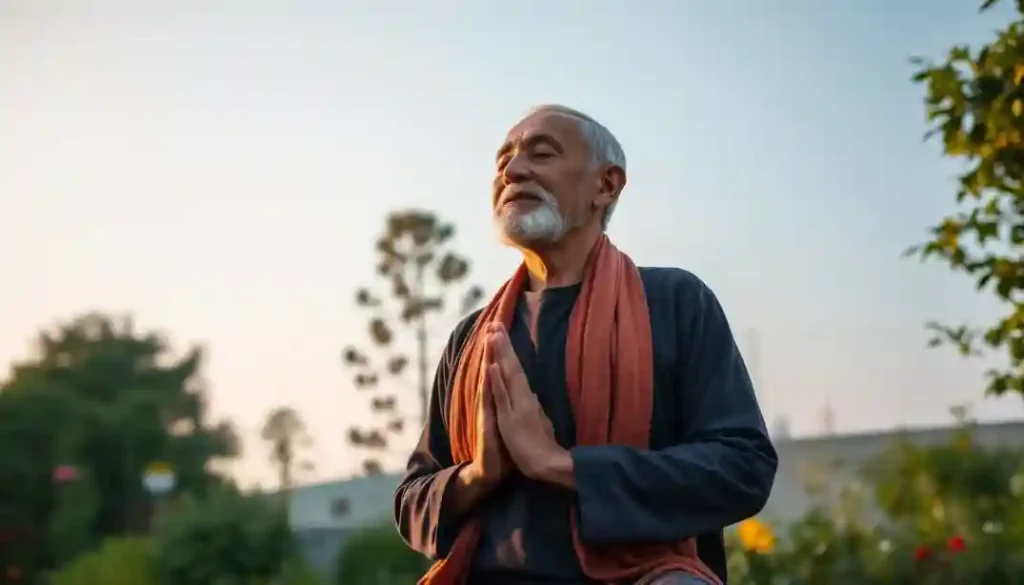
Meditation has long-term benefits on anxiety regulation, which may require more extended practice to show significant effects.
The Science Behind Meditation and Pranayama: How It Boosts Recovery
The benefits of meditation , pranayama and breathing exercises can be explained through their effects on neurology, physiology, and immune response:
- Activates the Parasympathetic Nervous System (PNS) : Helps counteract the fight-or-flight response, reducing heart rate and blood pressure.
- Reduces Inflammatory Markers : Studies show meditation influences immune responses, decreasing inflammation.
- Enhances Oxygenation : Deep, rhythmic breathing improves lung function, vital for COVID-19 recovery.
- Regulates Neurotransmitters : Increases serotonin (mood booster) and melatonin (sleep hormone), improving overall well-being.
Practical Implementation: How to Incorporate Meditation and Breathing into Recovery
Based on the study, hospitals, quarantine centers, and home-isolated patients can incorporate these practices into daily care:
- Guided Meditation (5-10 minutes, 3x daily)
- Follow audio or video instructions for mindfulness meditation.
- Focus on deep breathing, gratitude, and positive visualization.
- Anulom Vilom (Alternate Nostril Breathing, 8-10 rounds)
- Sit comfortably and relax.
- Close the right nostril, inhale deeply through the left.
- Close the left nostril, exhale through the right.
- Repeat, alternating nostrils, ensuring slow, deep breaths.
- Sleep Hygiene Practices
- Practice breathing exercises before bedtime.
- Create a calm, device-free environment for restful sleep.
Limitations & Future Research
While the study provided strong evidence of meditation and pranayama’s benefits, there were some limitations:
- Short duration (7 days) – Long-term effects need further research.
- Future research should explore how long-term meditation impacts recovery, inflammatory markers, and overall immune response.
Conclusion: Meditation and Breathing Exercises – The Key to Holistic Recovery
The study emphasizes that mental well-being is as crucial as physical health in fighting infectious diseases. Meditation and breathing exercises offer a simple, accessible, and cost-effective way to enhance mental resilience, reduce stress, and improve sleep quality.
As global healthcare systems move toward a holistic approach, incorporating mind-body interventions alongside medical treatment can significantly improve patient outcomes. Whether in hospital settings, quarantine facilities, or home isolation, adopting meditation and breathing techniques can be a powerful tool for recovery and long-term well-being.
By acknowledging and implementing such evidence-based complementary therapies, healthcare institutions can enhance patient care, promote faster recovery, and build a more resilient healthcare system for future challenges.
References
- Yoga for COVID-19: An ancient practice for a new condition
- Pranayama for Covid recovery: 3 effective breathing techniques to practice
- Effect of breathing intervention in patients with COVID-19
About The Author


