
Table of Contents
Healthcare quality plays a crucial role in achieving improved health outcomes and patient satisfaction. Factors such as accessibility, safety, and effectiveness directly influence recovery and long-term well-being. You could explore how the quality of care—through factors like accessibility, safety, effectiveness, and patient satisfaction—directly influences patient recovery, overall health, and long-term wellbeing.
As per Garvin quality characteristics, could be defined on an eight dimensional strategic level. We can easily obtain the competitive advantage by improving tweaking the dimensions.
Performance
Performance in healthcare is evaluated based on core operating characteristics, such as the effectiveness of treatments and patient recovery rates, which are key indicators of healthcare quality. Generally, it signifies the execution of an action. Most of the services in healthcare are overlapping in nature. If there is a glitch during one service delivery, the same will be reflected in others dependable services as well. It will lead to a customer dissatisfaction.
- Effective therapeutic action of a drug
- The performance of medicines is assessed through pharmacokinetics and pharmacodynamics, ensuring therapeutic efficiency and minimizing adverse reactions, which directly contribute to better patient outcomes. Half-life of the drug us also a performance indicator which could be signifies the performance of the drug. For a medicine, its selective therapeutic action which is a fundamental characteristic of performance; other performance characteristics are the degree of adverse reaction that the drug cause to the human being.
- LINAC (Linear Accelerator)
- This machine is used to provide external beam radiation to treat the cancer patients. Mostly these machine generates electron which is used to treat the cancer patients. However, the efficiency depends upon the planning of the treatment & right execution of the dose. Before planning for the treatment, it’s essential to monitor the error margin depending upon the type of machine. There are few machine which provides accuracy of sub millimeter level of precision, which shows a high performance of the machine.
Features
Features in healthcare refer to the unique attributes of medical equipment and technology, such as the precision of Linear Accelerators (LINAC), which enhance treatment outcomes. Basically these are responsible as a distinctive USP of the product which is accountable for the value ads.
- Packaging of Medicine
- Most of the drugs in the pharmacy are characterized based on the categories. Broadly medicines in India are categorized in to 18 schedules. Medicines of similar categories are kept together & these are labeled with warning or caution marks. For example, an injectable medicine, LASA drugs, high risk medicine packaging is different & with proper caution warning. Some medicine dorms are different like powder form drugs are in the form of tab, capsule. So it is easy to differentiate.
- Free education sessions
- This is one of the recent trend, which has been picked up by many of the hospitals. Patient and their immediate family members are being trained & briefed on the various aspects of their treatment. The counselling is of different types viz. financial, billing related, drug & treatment related, psychological, Emotional, & spiritual counselling. Hospitals now a days keeping a lot of emphasis on the mental health as well along with the physical health.
- It’s being delivered to the patients either one on one through a PCC (Patient care coordinator) or a MSW (Master of Social Work). The patient education materials & all are delivered through the printed or audio visual medium. Dietician & nurses are covering clinical queries & sessions related to treatment/ surgeries. These help the patient & their relatives to take informed decisions regarding their health.
Reliability
Reliability is a core dimension of healthcare quality. Patients trust healthcare providers that consistently deliver accurate diagnoses and effective treatments, building long-term credibility and brand loyalty. It will help to build upon the credibility of the brand & people could be converted as life time loyal members. Most of the big brands across the world be it Mayo clinic or Cleveland clinic are enjoying the better reputation because of their higher reliability.
- Error free /Accurate reporting
- Treatment outcome heavily depends on the right clinical diagnosis. Hence clinical labs in the hospital lays a vital role on the success of a physicians. Clinicians look for accurate data on a lab investigation, also the data need to show consistency time & again. Labs delivering high precision on clinical data could build upon reliability.
- If we see the clinical practices in a locality there are consultants who prefers a particular lab report, on critical cases. The logic behind this is the consistency in result because of which the lab builds high reliability
- The Importance of Accurate Medical Records and Compliance
- Medical practice regulations are becoming increasingly stringent, making accurate record-keeping essential for legal compliance and patient safety. Hence for the hospital it’s very much essential to keep all the treatment related evidences in the prescribed format. During the time of medico legal issues these are the documents which seems to be most reliable evidence to justify the rationale behind the treatment delivered or not.
- Hence an effective MRD (Medical Record Department) is most essential for the same. It could be either electronic or manual. The duration of the storage & the discarding of the record should be done as per the guidelines.
- Clinical records, contains, patient details, their diagnosis, prognosis. These records are considered to be confidential globally and could be shared with the prior written consent from the patient or the subject with respect to whom the record is maintained. Every patient can access their medical records lawfully.
Durability
As per the definition it defines as an “ability to withstand”. To be precise from the starting of the use of a product or service to the expiry. Healthcare services are perishable, but monitoring the durability of medical products like medications and blood bags ensures consistent quality and reduces risks. However, there are certain services within the hospital which could be monitored to evaluate the durability.
- Expiry drugs & Consumables in Pharmacy:
- Any drugs that’s being stored in the hospital pharmacy comes with an expiry, which indicate the durability of the particular medicine. Generally, the drug is supposed to perform with the same consistency before the date of expiry.
- In HCG we used to have policy where, physical stock verification is most every month & drugs need to be return back to the vendors before 4 months of expiry of the drug
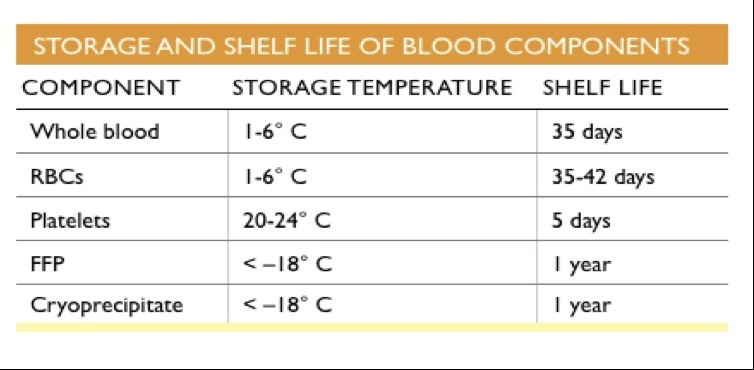
- Shelf life of Blood bags:
- Blood Transfusion Service is a vital part of the healthcare as there is no substitute for human blood and its components. Blood & it’s components are fragile in nature and it should be handled with due care; It should be kept with an accurate temperature & condition to avoid the damage of the blood products. At the same time, it should be consumed within the specified limit to avoid any kind of complication.
- Because of the great diversity in collection containers and anticoagulant preservatives, as well as storage capabilities within different blood services, the shelf life of different components varies considerably. Shelf life specifications must comply with local standards.
Conformance
The degree to which a healthcare organization meets established standards, plans & promises. It includes statuary compliances, Agreements, policies & procedures, national & international standards.
Statuary compliances
Hospitals must adhere to various statutory requirements, including national and international standards, to maintain quality, ensure patient safety, and avoid legal penalties. These are the obligations which is defined by the legal bodies & need to be fulfilled by the company under law (enactments, rules, regulations, notifications like Shops & Establishment Act, CST/GST, OSHA, FSAI, Contract Labor (A&R) Act, Employees Provident Fund, ESI, etc
Benefits of statutory compliance in a business
Business by following the statutory compliance, not only can saves itself from serious legal troubles, but also leads itself to a sustained growth without any hiccups. Benefits of being statutory complainant in a business are as follows.
- Avoiding legal problems and penalties
- Complying with requisite statutory requirements helps an organization avoid obvious consequences of non-compliance such as disqualification of directors/officers, imprisonment or penal liabilities against its directors/officers, payment of fines and/or penalties, suspension/revocation of licenses, lawsuits, work stoppages and in extreme circumstances, complete shutdown of businesses.
- Improved business operations
- When a business has successfully complied with every applicable statutory compliance requirements, it frees up time and resources to focus on its core business innovations and activities which inevitably leads to improved business operations resulting into the business growth.
- Quality improvements
- Adhering to statutory compliance helps businesses improve quality of their products and services, by enabling businesses to focus on their core business activities instead of expending time and resources on effecting the compounding of offences (where applicable), paying penalties, defending the litigation/ imprisonment or penal liabilities against its directors/officers, retaining the talented employees, etc. Statutory compliance prevents occurrence of potential risks related to non-compliance, and helps businesses prevent or detect failures or errors at early stages. This, in turn, results in greater operational efficiency.
- Boosts employee morale
- When a business observes statutory compliance, it boosts its good reputation and goodwill, which, in turn, positively influences its employee performance. A fully compliant business is highly likely to attract and retain talented and principled employees as compared to its non-compliant counterparts, and by proving its commitment to good business ethics, is likely to positively impact, rather boost employee morale. This leads to better and improved productivity of employees, which further leads to reduced attrition rates, and therefore, improved efficiency of the entity.
- Brand loyalty
- Businesses, which have efficient compliance management tools and program in place help them achieve compliance with necessary statutory requirements, signalling to key stakeholders and investors that compliance is a top priority for their organization. Good compliance not only demonstrates a business’ commitment to high ethical standards, but also reflects their expertise and awareness about relevant statutory mandates. It shows their intention to perform their business operations in a fair, just and transparent manner. This, in turn, fosters trust in customers, employees and vendors, and such trust promotes and strengthens brand loyalty and equity, ultimately leading to sustained growth of the business organization.
- Better public relations
- A fully compliant business benefits from better and improved public relations, since employees, customers, investors and other stakeholders are assured of the business’ commitment and adherence to highly ethical business conduct and practices.
- Improved business opportunities
- Entity’s investing in effective compliance management systems helps its to preserve and promote goodwill of the Entity, thereby places it in a higher bargaining position to negotiate and secure favourable business contracts. Investing in an advanced compliance regime also attracts better and more investments, thereby improving business prospects and opportunities of the organization.
- Competitive differentiation
- Good compliance is a differentiator that helps businesses gain competitive advantage over rival companies, while producing more efficient outputs, preserving the entity’s goodwill and integrity, and reducing compliance related risks.
- Risk management
- All entities irrespective of their nature, face crucial operational, financial, strategic, reputational, process, and various other types of risks, including compliance risk. In highly regulated industries such as healthcare and finance, compliance risks usually persist throughout the lifecycle of the entity, and tend to multiply when such businesses operate internationally. When a business conforms to requisite statutory compliance requirements, it avoids unnecessary legal troubles and various other risks associated with non-compliance such as payment of fines, cancellation/suspension of licenses, or even criminal liabilities. Therefore, statutory compliance helps businesses efficiently manage and prevent compliance risks.
Policies & procedures:
Like compliance which is basically external in nature, policies & SOPs are basically internal in nature. It’s being designed for the smooth flow of every process. It bestows a sense of standardization for each process, hence minimize the chance any defect. If written, then it helps the new comer to understand the process of the organization.
Formalized, written policies and procedures fulfill a number of important purposes:
- Expedite observance with recognized practices.
- Promote compliance with regulations, statutes, and accreditation requirements (e.g. NACO, WHO, NBH, JCI, NDPS, AERB, Pollution board, PNDT ACT, MTP AACT, minimum wages ACT).
- Reduce practice difference.
- Standardize practices across the units.
- Helps in the induction of the new employees.
- Reduce humane error because of the standardization.
Serviceability
Is the product easy to service. It’s the ability of the service provider to take immediate corrective action whenever something goes wrong or something unpredictable happens
- Handling of re admissions
- Though it’s not common but it also occupies most of the admission. The reason for the same is quite varied in nature, sometimes patient developed some comorbid symptoms during his hospital stay, sometimes patient used to develop another disease during hospitalization, hence readmission need to be done.
- Factors that may affect re admission — Factors which increases the probability of readmission may be changeable, especially those that relate to clinician or system level issues. Such factors include:
- Premature discharge
- Inadequate post-discharge support
- Insufficient follow-up
- Therapeutic errors
- Adverse drug events and other medication related issues
- Failed handoffs
- Complications following procedures
- Nosocomial infections, pressure ulcers, and patient falls
- Hospital readmissions can adversely impact cost and patient aftermaths. Preventing avoidable readmissions has the potential to greatly improve both the quality of life for patients and the financial welfare of health care systems
- Handling of complaints
- As per a survey a happy customer shares his experience with 2-3 people where as an unhappy customer share the same with 8-10 people. As healthcare is a service industry & most of the services are delivered through human intervention there are chances of errors are there. Hence feedback obtain the integral part of the healthcare services.
- Still people rely on their friend & known person to find a healthcare set up or professional consultant. Hence, patient complaints provide a valuable source of insight into safety-related problems within healthcare organizations. Patients are sensitive to, and able to recognize, a range of problems in healthcare delivery, which are sometime not identified by traditional systems of healthcare monitoring.
- While poor complaints supervision can lead to impairment of services good complaints management systems assist to:
- Improve the safety and quality of the services, by providing information about the experiences of consumers & career.
- Reinstate the trust and confidence of a consumer or career.
- Saves management time by the quick and simple resolution of complaints, avoiding escalation.
- Promote a culture of reporting and answerability.
- Prevent uneconomical practices and reduce the expenses, such as insurance.
- Create a more reasonable working environment for clinician.
How Aesthetics and Hygiene Improve Patient Satisfaction
It belongs to the external elements of the business aspects. Aesthetics in healthcare have become increasingly important, as clean, well-designed facilities improve patient satisfaction and reduce the risk of hospital-acquired infections. However, it’s occupying a centre stage for every level of business. Gone are the days where healthcare was non responsive, with the emerging competition & penetration of technology its far more responsive & aesthetically integrated.
- Cleanliness & Hygiene in the Hospital
- One of the key scopes of Quality of Care is hygiene of health amenities. One of the key indicators of patient’s satisfaction relates to her/his perception of sanitation in health care services.
- Sanitation and hygiene is important in any public place, but in hospitals and medical practices it is critical due to the fact that the spread of microorganisms can imperil individuals who are already at risk. Nosocomial infection is the name given to hospital-acquired infections which are unrelated to the original illness being treated.
- Therefore, keeping cleaning standards at the highest level is not only important to adhere to rule, but will also help save health care services time and money. Hospital cleaning is a crucial part of overall health and safety, as it’s a major contributor to governing the spread of impurities.
- Appearance of physical facility
- Even though this is the least important dimension, appearance matters. Just not as much as the other dimensions. The physical service setting plays a significant role in customers’ evaluation of their service experience, and influences their assessment of service delivery, as well as service quality insights.
- Physical aspects largely effect the opinions of customers when assessing intangible goods or service, since they often find components of service delivery too complex to evaluate. physical environment in healthcare, including the design characteristics, such as single rooms versus multi-bed rooms, noise levels, lighting, ventilation, ergonomic designs, supportive working settings and layout etc.
Best Practices to Enhance Healthcare Quality and Patient Experience
Perceived quality is an imperceptible, overall feeling about a brand. How-ever, it usually will be based on underlying dimensions which include characteristics of the products to which the brand is attached such as reliability and performance.
- Branding
- In healthcare, people will buy into a brand due to the security it offers and represents. A brand sets you apart from all the competition. This is because it gives your business its own unique personality. Your brand becomes a promise of what the patient can expect. Once you deliver, the good reputation of the business grows over time. As reputation grows, the brand grows stronger. It becomes a point of gaining competitive advantage. Branding affects your company’s relationship – and your ability to build trust – with every industry segment.
- Various elements, that are responsible for brand identity are:
- Logo or Trademark
- Brand Colors and Color Palette
- Tagline/ Punchline
- A consistent style for images and content
- Library of graphical elements
- Style Guide
- Reputation & credibility
- Awards and recognition marks can boost organization’s standing, setting organization “apart from the crowd.” They can also give team morale a boost by highlighting team and individual achievements. Winning awards can signal to the world that you’ve “arrived,” and help to cement company credibility.
- With the turn of the century, rivalry in most industries has gone up by several notches and every participant has had to innovate and maintain high standards to stay in the race. With evolving technology, increasing talent and more available avenues in business, there can only be so much variation in the standard of different products and services in direct competition with each other. To set oneself apart, attention to quality and customer orientation would need to be given utmost priority.
- Healthcare is no different. The mandate for quality in healthcare services has risen due to various market forces such as medical tourism, insurance, corporate growth and competition. With investment set to grow in healthcare, both from the private and public sector, stakes will be high and all participants will want to ensure that this investment is put to the best use possible. Customers of healthcare facilities, both internal (participant doctors, clinical and non clinical staff)) and external (patients), will want to ensure that they are a part of an institution that is recognized for the quality and high standard of their services. Therefore, it is imperative that healthcare facilities strive for excellence in quality. Accreditation bodies like NABH act as a quality assurance mechanism
- Following best practices for processes and Customer Satisfaction
- Continuous Customer Feedback using Net Promoter Score (NPS) or other measurable quality criteria.
- Following best practices using any quality framework eg Donabedian Model
References
About The Author


