

Yoga captures a graceful balance; its movements seem simple, yet mastering the inner balance demands deep surrender and discipline. If you have ever unrolled a mat and flowed through a few poses, you know that first taste of calm. The body stretches, the breath slows, and for a few moments the noise of everyday life fades away. But as you dig deeper, yoga reveals layers that challenge both body and mind in ways you never expected. What begins as a gentle physical activity slowly evolves into a practice that reshapes how you move, breathe, think, and respond to life.
For everyday people seeking better health, this push-pull dynamic makes yoga a powerful companion alongside doctor’s visits, medications, and lifestyle changes. It offers something rare in modern health routines: a blend of simplicity and depth that grows with the practitioner.
Why Yoga Feels So Easy at First.
Start with the basics, no fancy gear or gym membership needed. Stand in Tadasana or Palm Tree Pose: feet flat, arms raised upward, body stretched tall with an erect spinal column. It feels almost like practicing good posture. Or try Shashank Asana or Rabbit Pose: knees wide on the mat, fold forward, arms stretching out in front. For someone with a stiff back after long desk work or a tiring day of household chores, the relief can feel immediate.
These moves mimic daily actions, bending, reaching, and balancing, so your body understands them quickly. Yoga doesn’t demand sudden, explosive movements. Instead, it gently guides the body into positions that awaken dormant muscles and improve posture awareness.
Then come Sun Salutations (Surya Namaskar), a flowing sequence connecting breath with movement. Lunge forward, step back to plank, lift into cobra, move into downward dog. Twelve steps, five minutes, and you already feel warmer, more alert, and slightly energized. The heart pumps gently and muscles activate without the sweat-drenched exhaustion many associate with exercise.
Studies suggest this accessibility is why yoga works for such a wide range of people, from office workers suffering from chronic neck and back pain to older adults trying to maintain balance and mobility. A large review even found that consistent yoga practice significantly reduced fall risk among older adults within a few months.
Props make it even more beginner-friendly. Blocks provide support during stretches, walls help with balance, and a rolled-up towel cushions sensitive knees. Because of this adaptability, doctors often recommend yoga for stress relief, mild musculoskeletal pain, and general wellness. It’s a low-risk, high-reward entry point into physical activity.
This simplicity builds habits. Practicing even ten minutes daily can loosen tight muscles and deepen breathing patterns. Gradually, the knot of tension in your chest, built from traffic jams, work pressure, or financial worries, begins to soften. For busy lives, yoga fits perfectly. It can be practiced in pajamas before coffee, in a quiet corner of the house, or even in a park surrounded by nature.
The Real Work: Discipline Kicks In.
But the ease fades when discipline enters.
Hold Warrior II (Veerbhadra Asana): front knee bent, back leg straight, foot turned sideways, arms extended at shoulder level. Stay there for five breaths. Suddenly your thighs begin to burn and the mind whispers, “When will this end?”
Patanjali, yoga’s ancient philosopher, described the ideal pose as “sthira sukham asanam,” steady and comfortable. The paradox is clear: steadiness requires effort, while comfort requires relaxation.
Discipline builds strength quietly. Planks and Chaturdand Asana strengthen the core, helping prevent everyday injuries while lifting groceries or climbing stairs. Repeated forward folds slowly loosen tight hamstrings, protecting runners and walkers from muscle pulls.
Science supports these benefits. Research suggests regular yoga practice may reduce chronic pain by nearly half and improve blood sugar control for people managing diabetes. It also enhances balance, flexibility, and muscular endurance.
Yet the biggest challenge is mental. While holding poses, the mind wanders to emails, unfinished tasks, or tomorrow’s worries. Breath becomes uneven. The practice becomes a constant cycle of losing focus and then bringing it back.
That is the discipline of yoga: correct repetition with awareness.
For people with injuries or limitations, discipline also means intelligent adaptation. Wall-supported planks instead of full ones. Gentle lunges instead of deep squats. Yoga discourages ego-driven performance; instead it rewards patience and mindful progression.
Over months, this consistent effort rewires habits. Muscle memory improves posture, patience deepens emotional resilience, and sleep often becomes more restful. Cardiologists increasingly acknowledge yoga’s role in stabilizing heart rhythms and reducing hypertension risk.
But consistency is the key. Missing a day is fine, even a few days occasionally. Yet abandoning the practice altogether often brings back old patterns of stiffness, stress, and fatigue. Discipline slowly transforms the mindset from “I’ll try yoga” to “Yoga is part of who I am.”
Surrender: Let Go to Go Deeper.
Here lies yoga’s deepest paradox.
Push too hard, and progress stalls. Surrender becomes the missing ingredient.
In a forward fold, for instance, forcing the stretch often creates resistance. But bending the knees slightly and allowing gravity to guide the body gradually deepens the posture without strain.
Ancient yogic teachings describe this as a relaxing effort and merging with stillness. Modern neuroscience explains a similar effect: relaxation lowers cortisol levels and activates the parasympathetic nervous system the body’s natural calming mechanism.
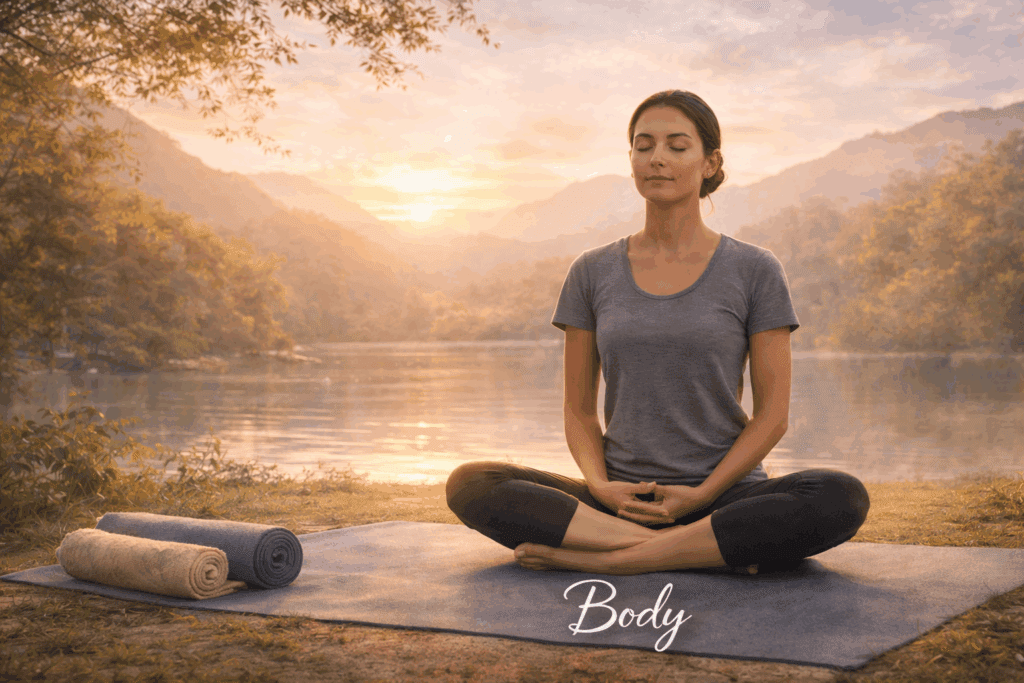
Consider Savasana, the final resting pose. Lying flat on the mat with eyes closed, scanning the body from toes to head. At first it feels endless; the mind jumps between thoughts. But with time, a quiet calm emerges. Muscles release hidden tension, breathing slows, and mental fog clears.
Surrender can also heal subtle stress patterns. Jaw tight from teeth grinding? Breathwork, or pranayama, gently relaxes it. Anxiety spiraling through the mind? Slow nasal breathing mimics the calming effect of certain medications by regulating the nervous system.
Research shows that regular yoga and breathwork can significantly reduce anxiety scores and improve emotional stability. Gentle poses like legs-up-the-wall or supported bridges soothe the nervous system and may even improve digestion and gut health.
This surrender extends beyond the mat. In traffic jams, instead of reacting with anger, the breath becomes an anchor. During disagreements at home, the practice teaches pause and perspective.
Yoga trains resilience.
How It All Fits for Health Wins.
The beauty of yoga lies in this paradoxical combination.
Simple movements bring quick relief. Discipline builds strength and endurance over time. Surrender nurtures emotional and mental balance.
Back pain from prolonged sitting? Cat-Cow (Marjari Asana) gently mobilizes the spine. Add short holds for strength and finish with relaxation. Gradually stiffness fades.
High blood sugar? Slow Surya Namaskar combined with deep abdominal breathing supports metabolic balance.
Heart palpitations or anxiety? Gentle flows followed by deep rest can stabilize the nervous system and reduce stress-related risks.
Research even suggests long-term yoga practitioners show increased thickness in brain regions responsible for emotional regulation and calmness.
Hurdles and How-Tos.
Many beginners quit early because yoga feels “too easy.” Others push too aggressively and injure themselves. Some feel bored because progress appears slow.
But slow progress often means strong foundations.
Start gently and increase intensity gradually. Listen carefully to your body. Understand that repetition builds strength, flexibility, and mental clarity.
Always consult medical professionals when managing health conditions. Yoga works best as a complementary practice alongside medical care.
Aim for at least three sessions per week of 30–45 minutes. Focus on consistency rather than perfection. Track your mood, energy levels, and small improvements.
Adding a short walk after yoga and maintaining balanced nutrition can amplify results. Remember that yoga occupies only one hour of the 24 hours in a day. The sincerity and attention you bring during that hour shape its impact.
Keeping a journal, writing notes like “Held the pose longer today” or “Felt calmer afterward,” can help maintain motivation. Joining a community class or online group also adds encouragement and accountability.
Your Yoga Path Ahead.
Yoga is not a quick fix. Its simple outer appearance hides deep inner work. Discipline cultivates strength and perseverance, while surrender invites peace and balance.
With consistent practice, the shifts become noticeable: a stronger body, a clearer mind, steadier emotions, and a calmer heart.
Maharishi Patanjali beautifully expressed this transformation in the Yoga Sutras (Sadhana Pada) with the verse:
“Tato dvandvān abhighātaḥ.”
It means that from mastery of posture comes freedom from life’s opposites—heat and cold, pleasure and pain, success and failure.
In modern life, where we constantly rush between responsibilities, yoga becomes a quiet toolkit for balance. Whether managing work stress, raising children, or coping with physical aches, the practice reminds us that stability begins within.
So unroll the mat.
A simple step today can lead to profound change tomorrow.
Breathe gently, move steadily, surrender deeply.
Your inner balance is waiting.
About The Author


