
“Use Antibiotics Wisely Today, So They Work Tomorrow.”
Antibiotics have saved millions of lives since their discovery. They help treat bacterial infections, including pneumonia, urinary tract infections, tuberculosis, and bloodstream infections. However, their effectiveness is now under serious threat due to a growing global problem: antibiotic resistance.
Antibiotic resistance is not just a medical issue; it is a public health crisis that affects individuals, families, and entire communities. Understanding what it is and how everyday actions contribute to it is the first step toward protecting ourselves and future generations.
What Is Antibiotic Resistance?
Antibiotic resistance occurs when bacteria change or adapt in response to antibiotic use. Instead of being killed by the medicine, these bacteria survive and continue to multiply. Over time, the antibiotics that once worked effectively become less powerful or completely ineffective.
This does not mean the human body becomes resistant it means the bacteria do. When infections become resistant, they are harder to treat, require stronger or more expensive medications, and may lead to serious complications.
In severe cases, infections that were once easily curable can become life-threatening.
Why Misuse and Overuse of Antibiotics Is Dangerous.
Antibiotics are designed to treat bacterial infections, not viral illnesses such as the common cold, flu, or most sore throats. However, antibiotics are often used when they are not needed.
The more antibiotics are used, especially incorrectly, the more opportunities bacteria have to develop resistance. Some major reasons for resistance include:
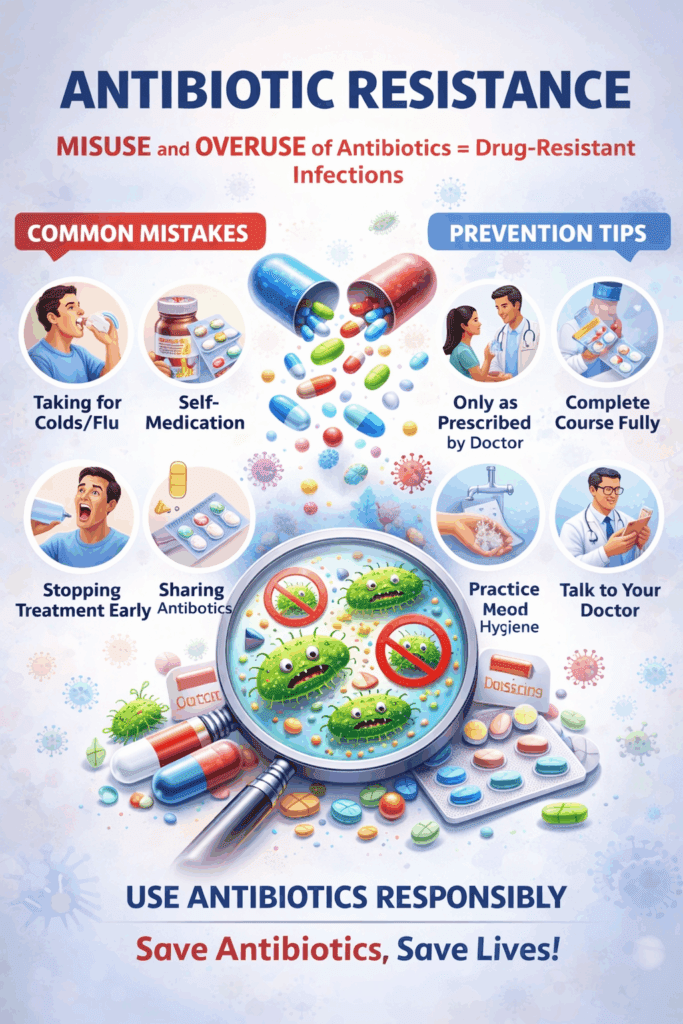
1. Taking Antibiotics for Viral Infections
Colds, coughs, and flu are usually caused by viruses. Antibiotics do not work against viruses. Taking them unnecessarily increases resistance without providing any benefit.
2. Self-Medication
In many places, people buy antibiotics without a prescription. Taking medicine without a proper diagnosis can mean using the wrong drug, wrong dose, or wrong duration.
3. Incomplete Courses
Many people stop taking antibiotics as soon as they feel better. However, stopping early may leave behind stronger bacteria that survive and become resistant.
4. Incorrect Dosage
Taking lower doses or skipping doses reduces the drug’s effectiveness, allowing bacteria to adapt and survive.
Each of these behaviours contributes to the spread of drug-resistant bacteria in the community.
Common Mistakes People Make
Antibiotic resistance grows because of everyday habits that seem harmless but are actually risky. Some common mistakes include:
- Saving leftover antibiotics for future use
- Sharing antibiotics with family members
- Requesting antibiotics from doctors without proper testing
- Ignoring instructions about timing and duration
- Using antibiotics for mild infections without medical advice
These actions not only reduce the medicine’s effectiveness but can also lead to complications and stronger infections in the future.
India’s Growing Challenge with Drug-Resistant Infections.
India faces a significant burden of infectious diseases, which increases antibiotic use. Unfortunately, high consumption combined with misuse has contributed to rising drug-resistant infections.
Resistant infections such as multidrug-resistant tuberculosis (MDR-TB), resistant urinary tract infections, and hospital-acquired infections are becoming more common. Treating these infections requires stronger, more expensive medicines and longer hospital stays.
Drug resistance also increases healthcare costs and places a strain on families and healthcare systems.
Public awareness remains one of the most important tools in controlling this crisis.
How Patients and Doctors Can Work Together.
Preventing antibiotic resistance requires cooperation between healthcare providers and patients. Everyone has a role to play.
For Patients:
- Only take antibiotics when prescribed by a qualified doctor.
- Complete the full course exactly as directed.
- Do not share medicines or use leftovers.
- Avoid pressuring doctors to prescribe antibiotics.
- Maintain good hygiene to prevent infections.
For Doctors:
- Prescribe antibiotics only when necessary.
- Choose the right antibiotic and correct dosage.
- Educate patients about proper use.
- Promote vaccination and infection prevention.
Together, responsible prescribing and responsible usage can slow down resistance.
Why Responsible Use of Antibiotics Matters.
Antibiotics are a precious resource. Without effective antibiotics:
- Minor injuries could become dangerous.
- Surgeries would carry higher risks.
- Cancer treatments and organ transplants would become more complicated.
- Common infections could once again become deadly.
The misuse of antibiotics today can impact the health of future generations. Responsible use ensures that these life-saving medicines remain effective for years to come.
Simple Steps to Protect Yourself.
You can reduce your risk of infection and limit the need for antibiotics by:
- Washing hands regularly
- Keeping vaccinations up to date
- Practicing safe food handling
- Avoiding unnecessary antibiotic use
- Seeking proper medical advice before taking medication
Small, everyday actions make a big difference.
Final Thoughts.
Antibiotic resistance is a growing global health threat, especially in countries with high infection rates and widespread antibiotic use. The misuse and overuse of antibiotics are accelerating this problem.
However, the solution is within reach. By understanding the importance of responsible antibiotic use, avoiding self-medication, and following medical advice carefully, individuals can help combat drug-resistant infections.
Antibiotics save lives but only if we use them wisely.
About The Author


