

Table of Contents
What is Leadership?
In today’s rapidly evolving healthcare landscape, effective leadership plays a pivotal role. Leadership is not just about influencing others; it’s about inspiring innovation, fostering collaboration, and adapting to continuous change. Let’s explore what top leadership skills for next-gen healthcare executives will be a must to succeed.
Leadership is taking people where they would have gone by themselves. – Jo Owen
Leadership is influencing people. Nothing more & nothing less. – John Maxwell
The process of influencing the behavior of other people towards group goals in a way that fully respects their freedom.
Common Leadership Mistakes to Avoid in Healthcare
- Dictatorship in making decisions
- There is just no place for Mavericks.
- Getting in to internal politics and getting work done by “divide and rule” policy
- Lack of clear communication and not being a good listener
- Giving more importance to paperwork.
- Do as I Say – Attitude
- Profit first, People and planet last
- Top – Down Hierarchy
Traditional leadership practices will no longer suffice for next-gen healthcare executives. To lead successfully in the 21st century, leaders must adopt new healthcare leadership competencies.
How 21st-Century Mindset Shapes Future Healthcare Leadership?
Every problem is considered as mere solution, an opportunity to lead and the one chance to make a difference and come up.
People will find opportunities in problems itself. Priorities will shift. At first the priorities were Profit > Planet > People. And now it will be Planet> People > Profit.
Now, it is important to understand what will be the mindset of next generation of patients and what will they expect. Some of the possible things are:
- Easy access to technology & information: With increased exposure to social media, smartphones, internet patients have an access to loads of information at their finger tip. Before walking into the doors of the hospital, they have already done the research of their condition, about the hospital, about the physician etc. The emergence of big data, cloud based technologies for storage of large amount of data, sudden explosion of data capture will give a boost to new analytical tools.
- Creating a loyal patient base will be increasingly difficult: It will be very difficult to satisfy your customers. Their demands are ever increasing. eg In any eye care services, the most common cause of patient dissatisfaction is the waiting time. When the patients get their pupils dilated for retinal examination, they have to sit minimum for 30 – 45 minutes. Most of the time patients expect like Mc Donalds, Dominos – they want quick services even here. But it’s the body mechanism and this process cannot be accelerated by any means. Inspite of explaining everything, long waiting time is the most common issue faced.
- New way of building patient – physician relationship – The hospitals which will provide more seamless, transparent care, make the entire health care experience delightful, keep patients and their relatives engaged and make them a part of the decision making process; will be able to survive the long race and will have a competitive edge.
What is 21st Century Leadership?
It’s a subject of great depth and broadness and one cannot explain it in a simple sentence. It indicates that the leaders should pose the ability to motivate and inspire the followers, to think beyond the given attributes of achieving what is desirable, possible and achievable.
An old Sri Lankan proverb says,
One should try to be a bamboo tree rather than an oak tree regardless of the strengths.
The bamboo tree is much weaker tree as compared to the strong oak tree. But its very flexible. When strong winds blow, bamboo tree will survive and bend in the direction of the wind. But the oak tree inspite of being strong and mighty will get uprooted. So in the ever changing world of 21st century, leaders will have to be like bamboo tree. Despite being well prepared they might always leave room for errors or sudden change.
What qualities will the future leaders have?
- Value People for their Diversity & Unite People:
- The success of any healthcare organization relies not only on tools or finances but on the strength of diverse teams, emphasizing collaboration and shared healthcare leadership competencies. So the leaders have to make sure that the followers are united and will collectively carry forward the mission & vision of the organization. Building up integrity in the work environment and amongst all employees is the key. An integrated organizational system is always much more profitable and will have a competitive advantage over others.
- Reinventing Work – The ROWE :
- In this model, employees are paid for the results attained, rather than number of hours of work. So the entire working environment is purely result oriented.
- Employee Support & Engagement :
- The topmost priority will be the people & the working environment. Being a leader one has to develop a sense of ownership in each and every employee. This will go a long way in increasing the profitability and productivity of the organization.
- Two way Communication & being a good Listener :
- The one-approach-fits-all way of thinking has become outdated and those who embrace the high art of listening are destined to be the better, more compassionate leaders. It is said that 90% of the corporate level problems are solved by being a good listener.
- According to HBR, a good listener is like a trampoline. One can bounce off their ideas , thoughts, doubts in front of them. A good listener will not just passively absorb all of these ideas, but will actively support it. And just like trampoline will help one gain more energy, amplification and attain new heights. Just like what trampoline does to a child. Keep engaging your employees, get their feedbacks on the organization and this will make them feel valued that their voice is also being heard. One has to let go of the age old rule, Boss is always right. Always take into consideration the big picture of the organization v/s the personal egoistic conflicts.
- Collaboration:
- In the following years, if you want the organization to be on the profitable chart, then it is very very important for all to work together and direct their entire efforts towards achieving the common goal. The Ensemble approach ought to be followed. I think most of us must have experienced the musical ensemble. Different musicians, singers and artists play their different roles and different stages of the performances and finally come up with a successful show with a superb team coordination.
- Leaders will need to strive for such type of collaborative efforts, build up their own efficient team and direct them towards a common goal and make them cover up for each others flaws. Hence the end result will definitely be seen on the top line.
- Awareness and Acceptance:
- The first step to this changing environment is awareness and second one is accepting these changes. The greatest danger in times of turbulence is not the turbulence – it is to act with yesterday’s logic – the famous quote by Peter Drucker. Leaders have to learn & unlearn to accept the changes or else they will never grow. This will only lead to the path to improvement in the system, in the processes, in the age old beliefs.
- For successful leaders , the Yes, and… principle has multiple implications:
- Awareness of the present situation and being very much informed and prepared of what is going to come in the future or now
- Co-creating and being well prepared with the alternatives with others
- Being acceptable to change in different situations
- Optimally utilizing the talent, skillsets and resources that are currently available.
- Risk Taking
- Oprah Winfrey, the only African – American who is on Forbes Billionaires list had commented once, Do the one thing you think you cannot do. Fail at it. Try again. Do better the second time. The only people who never tumble are those who never mount the high wire. Even Jeff Bezos had risked all his high paying jobs and founded Amazon. It started with a small bookstore in a garage. And today we all know where Amazon has reached.

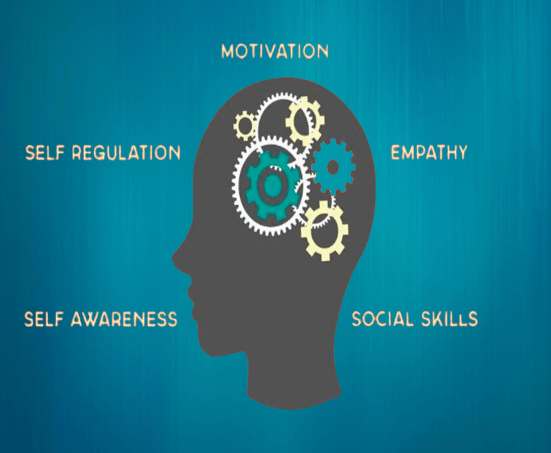
- Emotional Intelligence
- Emotional intelligence is a trait.. It has to be developed and practiced over time. People with high level of EQ are very much aware of their emotions and how others will be affected by their emotions.
- Leaders who are emotionally intelligent develop a secure environment in the organization which motivates the employees to take calculated risk, share their viewpoints and ideas. A sense of ownership, working collaboratively is automatically woven into the possible emotional reactions to the organizational changes. They will be able to drive the organization forward without getting their egos in between. Personal conflicts in between leaders and employees is very much known to affect the productivity and screw up the working environment for everyone. organizational culture. Leaders with high level of EQ will also be able to judge other’s
- Employing More and More Young Talents:
- Leaders will need to start training junior employees for becoming future leaders. They are the ones who would better reflect the new multicultural patients. They will be loaded with new ideas, new innovations. They will not be resistant to changes and can easily learn and unlearn.
- Diversity amongst staff is also known to improve the bottom line. Companies with the most ethnically diverse executive teams are 33% more likely to outperform peers on profitability, according to McKinsey & Co.
- Creating passionate employees is the key. So whether to find it or cultivate it? Developing increased interest in what they are doing is a challenging task for the leaders.
- Growth Mindset:
- Our mindsets are malleable. People with growth mindset will always be open to learn, adapt inspite of all the technical difficulties and will have less workplace conflicts. Leaders with growth mindset will always find a silver lining, look out for a ray of hope in every problems. A person with growth mindset will always give more emphasis and will encourage training and learning.
- For Instance good healthcare leaders will know the importance of following Donabedian Model for following the best practices and improving the overall processes and healthcare delivery.
- Accountability:
- In an organization along with success, there will be failures also. So who is accountable for all those failures? Creating a “we” environment is important and having shared accountabilities in between departments and not getting into blame game. Continuous performance management systems, making everyone aware and clear of what is expected out of them increases the chances of accountability.
To thrive as a next-gen healthcare executive, embracing continuous learning, emotional intelligence, and collaboration is essential. By cultivating these leadership skills, you’ll be well-prepared to navigate the challenges of the 21st century and drive innovation in healthcare. Ready to become the leader healthcare needs? Start today!
References
- Strengthening Leadership Capacity in Indian Healthcare
- Elevating Healthcare with Emotional Intelligence: Lessons for Leaders
About The Author


