
Table of Contents
Over the past two decades, India has undergone a significant epidemiological transition, one that has not received adequate public attention: the growing challenge of overweight and obesity. In this article let’s talk about growing importance and ways to tackle this growing obesity crisis in india. According to the National Family Health Survey round 5 (NFHS-5, 2019-21), nearly one in every four Indian men or women is obese. The prevalence of overweight and obesity varies across states, from 8% to 50%, affecting both urban and rural populations. Alarmingly, the World Obesity Federation highlights that India’s annual increase in childhood obesity ranks among the world’s steepest. With adult obesity doubling in the past 15 years and tripling in the last three decades, this crisis demands immediate intervention.
Why Growing Obesity Crisis Requires Urgent Attention?
Obesity and being overweight are often dismissed as personal issues, with societal norms in India normalizing excessive weight. Historically, India has transitioned from a food-deficient to a calorie-sufficient nation, albeit with significant inequitable distribution. Yet, the ‘State of Food Security and Nutrition in the World’ report (2024) estimates that 55% of India’s population (78 crore people) cannot afford a healthy diet, while nearly 40% lack an adequate nutrient-rich diet. Meanwhile, the easy and affordable availability of high-fat, salt, and sugar (HFSS) foods and ultra-processed foods (UPF) has exacerbated the obesity crisis.
The impact of urbanization has also played a major role in reducing physical activity. According to the World Health Organization (WHO), 50% of Indians fail to meet the recommended physical activity levels, contributing to increased obesity rates. Furthermore, the ‘thin fat Indian’ hypothesis suggests that even individuals with a normal body mass index (BMI) often have higher body fat, making them more susceptible to metabolic diseases.
Health and Economic Consequences
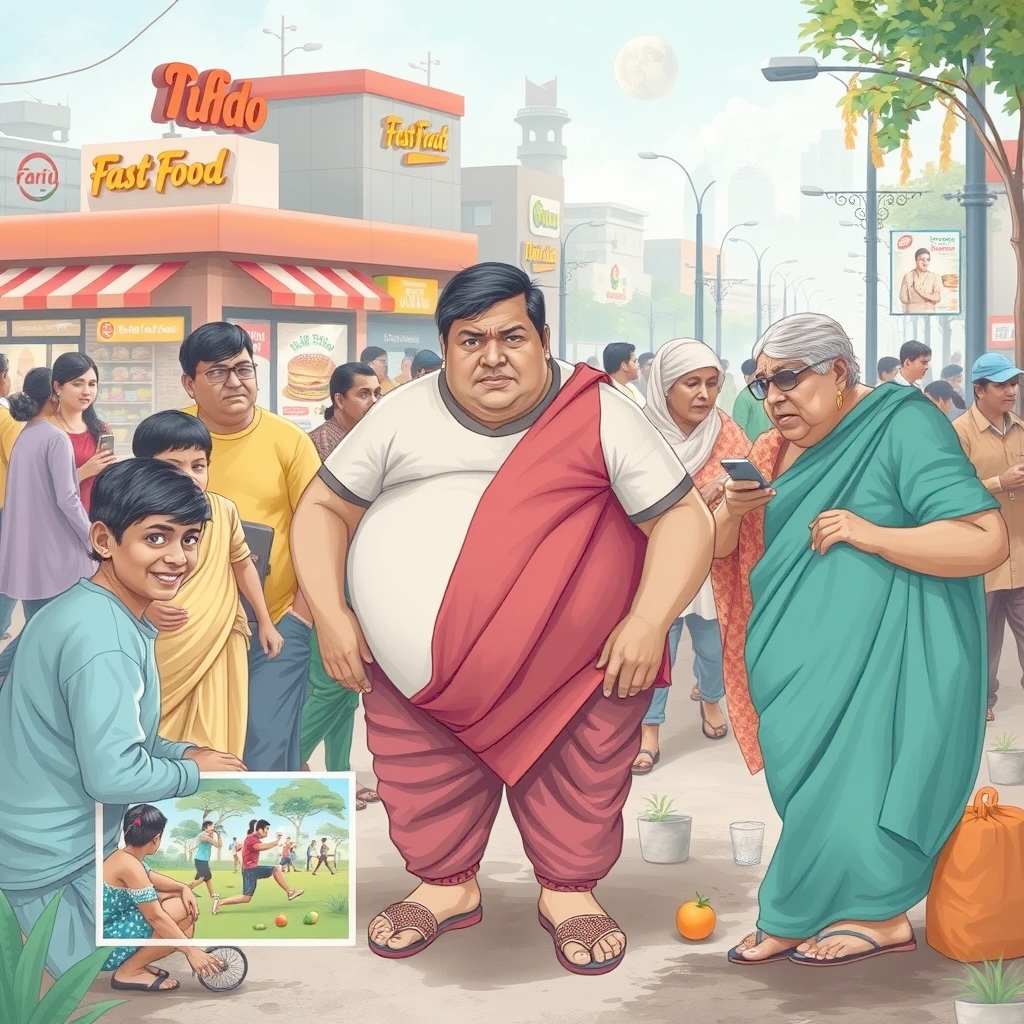
The ‘common soil hypothesis’ establishes obesity as both a risk factor and a cause of diabetes. Currently, one in four Indian adults (25 crore people) is either diabetic or prediabetic. Overweight and obesity contribute to an estimated 3.4 million deaths annually worldwide. Recognizing obesity as both a lifestyle risk factor and a complex, chronic disease, WHO and global health organizations have stressed the urgency of addressing this issue.
Beyond health consequences, obesity places a significant economic burden on India. The Global Obesity Observatory estimated that in 2019, obesity and overweight-related costs in India amounted to $28.95 billion (₹1,800 per capita), accounting for 1.02% of the nation’s GDP. Without effective interventions, this economic burden is projected to increase to ₹4,700 per capita by 2030, reaching 1.57% of GDP. The India Economic Survey 2024-25 has acknowledged obesity as an emerging health challenge and has recommended higher taxation on UPF as a preventive measure.
The Way Forward
- Policy Interventions: The government must implement stringent policies such as higher taxation on HFSS foods, stricter regulations on marketing unhealthy foods to children, and clearer nutritional labeling.
- Public Awareness Campaigns: Nationwide campaigns are necessary to educate people about the risks of obesity and the importance of a balanced diet and regular physical activity.
- Healthcare System Strengthening: Health professionals must be trained to recognize and address obesity as a medical condition, integrating weight management into routine healthcare services.
- Promotion of Physical Activity: Urban planning should encourage active lifestyles by improving access to parks, cycling tracks, and pedestrian-friendly spaces.
- Nutritional Equity: Initiatives should be undertaken to make healthier food options more affordable and accessible, ensuring that nutrition is not a privilege but a right for all citizens.
Conclusion
The growing challenge of obesity is no longer just a health concern; it is a national crisis with far-reaching economic and social consequences. Without urgent action, India will face a surge in non-communicable diseases and escalating healthcare costs. A multi-pronged approach, combining government policy, public awareness, and healthcare interventions, is crucial to reversing this trend and safeguarding the nation’s health and economic well-being. The time to act is now.
References
- World Health Organization (WHO) Reports on Physical Activity and Obesity.
- The World Obesity Atlas 2022, published by the World Obesity Federation, predicts that one billion people globally, including 1 in 5 women and 1 in 7 men, will be living with obesity by 2030.
- Obesity is an increasingly common problem because the environment we live in makes it difficult for many people to eat healthily and do enough physical activity.
- Achieving Healthcare Excellence Through a Patient-Centric Approach
About The Author


